Best Airbrush Compressor for Scale Modelers: Match the Unit to the Job
The useful compressor is the one whose documented working pressure, airflow, controls and fittings fit your paint, airbrush and session. This guide compares buyer jobs and maker-published specifications, not workshop tests, popularity or price rankings.
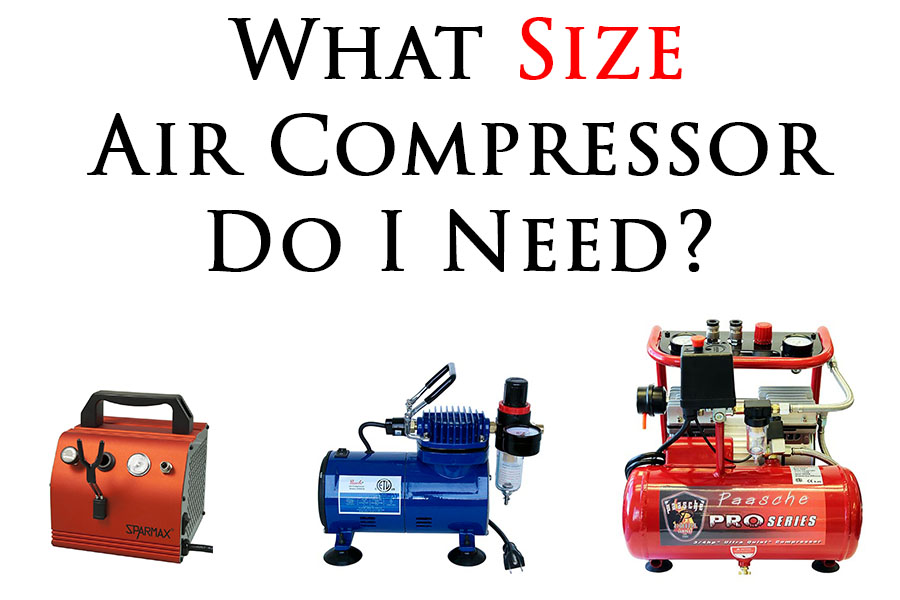
Choosing an airbrush compressor for scale modeling
Start with the job, not a best-of list
A compressor only supplies regulated air. It does not choose your airbrush's feed type or action, set a nozzle size, or guarantee a line width. Those come from the brush, its exact matched nozzle and needle, the paint and your technique. Match the air supply to the job first, then confirm the documented details that matter.
| Buyer job | What to confirm | Useful starting point |
|---|---|---|
| Occasional touch-ups and small parts | A regulated working range that includes the pressure your brush and paint instructions name; a moisture trap; a hose and fitting that match your brush. | A compact tankless unit can be adequate if its maker documents the working pressure and airflow you need. A tank is a convenience, not a requirement. |
| Primer, base coats and longer passes | Documented airflow at working pressure, a regulator that holds a steady setting, and the maker's duty/thermal guidance for longer sessions. | Look for a unit whose maker publishes airflow and working pressure, not only horsepower or tank size. A tank may help buffer demand, but it does not set the pressure at the brush. |
| Small bench or shared room | Footprint, mass, hose routing and a noise figure measured under stated conditions. Do not compare figures from unmatched tests. | Check dimensions and published noise conditions in the manual. A number without its test condition is not a like-for-like comparison. |
| Two brushes or changing jobs | Number and type of outlets, independent regulation if offered, and the fittings each brush needs. | Check the maker's documented outlet and fitting configuration. Do not assume that a second brush will share one regulator setting. |
| Working in humid conditions | Moisture control: trap placement, drain routine and whether the maker specifies an additional filter. | Use the compressor and brush manuals to place and drain the trap. A trap is not a substitute for draining the tank and line. |
| Using a workshop compressor you already own | The regulated pressure at the brush, filtration, hose/fitting compatibility and the airbrush's own working range. | Possible with suitable regulation and moisture control; check the actual brush manual. A workshop unit is not automatically unsuitable, and an airbrush-specific unit is not automatically required. |
Two documented examples, read in context
These are specifications from the makers' pages, not rankings. They show why a single headline number is not enough: working pressure, maximum pressure, pressure-switch settings, airflow, mass and noise answer different questions.
| Model | What the maker documents | What it does and does not tell you |
|---|---|---|
| Iwata Power Jet Pro North American IS975 specification | 1/6 HP; 2 L tank; 1-50 psi working pressure; 75 psi maximum; 62 dB; 110-120 V, 60 Hz. | Working pressure and maximum pressure are different figures. The noise figure belongs to the maker's stated test, not a comparison with another brand. Horsepower alone does not give airflow, duty cycle or pressure at the brush. |
| Sparmax TC-620X | Oil-less twin-cylinder piston; 2.5 L tank; pressure switch 40 psi on / 60 psi off; airflow 23-32 LPM; mass 10.4 kg. | The 40/60 psi values are pressure-switch settings, not the recommended pressure at the airbrush. Airflow and mass are maker figures for the specified version; check the model and market you are buying. |
Specifications checked 21 October 2026 against the linked maker pages. Models, versions and market ratings can change; confirm the current page and manual before buying. No price, review score or comparative quality ranking is implied.
Tank or tankless: a tradeoff, not a rule
A tank stores air, so the motor can fill it and cycle off while you spray. That can help with short bursts of demand and can reduce motor run time, but it does not guarantee a steady pressure at the brush: the regulator, hose, fittings, leaks and the brush's demand still matter. A larger tank also adds size and weight.
A tank can suit you if
You want stored air for intermittent bursts, you have room for the extra size and mass, and the maker documents the working pressure and airflow your job needs. Check the manual for drain and duty guidance.
A tankless unit can suit you if
Your sessions are short or intermittent, the maker documents enough working pressure and airflow for your brush and paint, and the published noise and duty guidance fit how you work. It is not categorically unusable, and it is not automatically the better choice either.
What the compressor does not decide: feed type is not action type, a gravity cup does not compress air, and nozzle diameter alone does not predict line width. Those are properties of the brush, its matched parts, the paint and the hand on the trigger. Confirm the compressor's hose and fitting with the brush maker, then set pressure at the regulator and test.
Controls, ratings and parts to confirm
Regulator and gauge
The regulator sets pressure at the brush; the gauge reads it. Confirm the working range and set it with air flowing as the brush manual describes.
Working vs maximum pressure
A maximum or tank rating is not a working setting. Keep the distinction the maker publishes, and check the brush's own range.
Airflow at pressure
Airflow quoted without the pressure and test condition is incomplete. Ask what the figure describes before comparing units.
Duty and thermal guidance
Long sessions, continuous spraying and warm rooms can change how a unit performs. Follow the maker's duty and cooldown instructions rather than inferring them from horsepower.
Moisture control
Check trap placement, drain routine and hose routing. Humidity and a cold line can put water where the paint path does not want it.
Hose, fittings and outlets
Match the thread and fitting to the brush and any quick-release you use. Do not force an adapter or assume a second outlet shares the same regulated setting.
Noise and workspace
Use the maker's published figure and its conditions, along with mass and footprint. Do not compare a sound rating from one test method with another.
Version and manual
Model names can cover different voltages, tanks, fittings or market versions. Check the exact version's manual before you rely on a specification.
A practical buying checklist
- Write down the working pressure range and airflow your airbrush and paint makers specify.
- Check that the compressor's documented working range covers that pressure — not just its maximum or tank rating.
- Confirm airflow at a stated pressure and test condition, or ask the maker if it is not published.
- Check the regulator, gauge, moisture trap, drain and hose/fitting arrangement against your brush.
- Read the duty/thermal and noise guidance for the version and market you are buying.
- Check mass and footprint against your actual bench, not a marketing word such as "compact".
- Download or open the exact model's manual and parts diagram before ordering.
- Plan a test pass on scrap at the brush's working setting; the gauge and the spray are the final check.
Frequently Asked Questions About Airbrush Compressors
What is the best airbrush compressor for beginners?
There is no single best model. For occasional touch-up work, a unit with a documented working range, a regulator, a moisture trap and a manual that covers your brush can be enough; tankless is an option, not a failure. Check the exact model's specifications and fittings before buying.
What compressor should I use for painting miniatures?
Start with the pressure and airflow your airbrush and paint instructions name, then choose a unit whose documented working range covers them. A small tank or a tankless unit may both be suitable; the brush, paint and your session length matter more than a category label.
Can I use a workshop compressor for an airbrush?
It can be possible with suitable regulation, filtration and fittings, but check the airbrush manual and the compressor's actual regulated output. A workshop compressor is not automatically wrong, and an airbrush-specific compressor is not automatically required.
How do I know what pressure to set?
Use the paint and airbrush makers' instructions for that exact setup, set the regulator with air flowing, and test on scrap. The site's PSI selector gives authored starting bands only; a compressor's maximum, tank or pressure-switch figure is not your working pressure.
Do I need a moisture trap?
Moisture control is useful in humid conditions, but the right trap, placement and drain routine depend on the compressor and brush manuals. A trap does not replace draining the tank and line, and not every drop of water comes from the same place.
Is a twin-piston compressor better than a single-piston one?
Not as a universal ranking. More pistons can change airflow, heat and noise, but the maker's documented working pressure, airflow, duty and noise conditions are what matter for your job. Compare those figures for the exact versions, not the piston count alone.
Check the exact model before you buy
Open the maker's page for the version you are considering, then match its documented working pressure, airflow, controls and fittings to your brush and paint instructions.
View a documented exampleSpecifications can change by model version and market. Check the current maker page and manual.