Single Action
Airbrush: Simplified Precision.
A single-action airbrush sets paint flow before the pass, so the trigger starts and stops air and paint together. It suits priming, base coats and repeatable coverage — and with the right nozzle, paint and distance, it can also spray controlled detail.
| Spraying Task | Single | Dual |
|---|---|---|
| Priming Model | Suits | Also works |
| Base / Field Color | Suits | Also works |
| Fine Detail | Preset + technique | On-the-fly control |
| Smooth Gradients | Preset + technique | On-the-fly control |
The Simplest Way to Start Airbrushing
A single action airbrush does one thing when you press the trigger: it starts air and paint together, with paint volume preset before you spray. There is no mid-stroke adjustment — you press down, it sprays, you release, it stops.
That simplicity is why it suits repeatable jobs. If your main tasks are priming a model, laying a smooth base coat, or covering large areas with even colour, a single action airbrush reduces the number of controls to coordinate. A dual-action brush is more flexible when you need to change paint flow during a pass.
Is a Single Action Airbrush Right for Your Tasks?
Priming & Base Coats
The 'Best Fit' for even coverage. No need to vary flow mid-pass; just consistent, reliable results.
Large Area Coverage
Delivers a smooth, repeatable result across fuselage panels or hull sections without managing complex controls.
Quick Task Spraying
Preset flow allows you to pick up and spray immediately. Ideal for dedicated-task brushes.
Fine Detail & Gradients
Possible with a small nozzle/needle, thin paint and a carefully preset flow. A dual-action brush makes mid-pass adjustment easier.
One Button, Two Jobs: How it Works
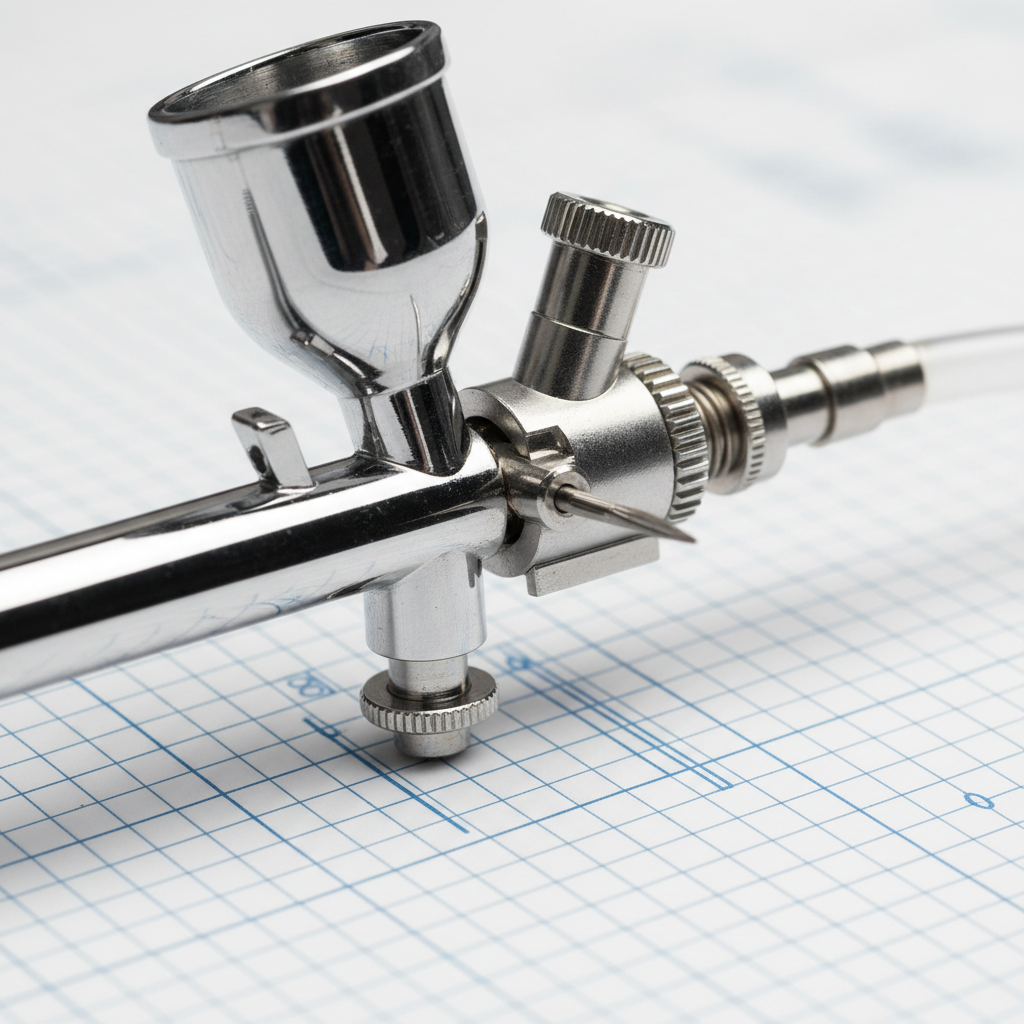
On a single action airbrush, the trigger has one axis of movement: straight down. Pressing it opens the air valve and releases paint simultaneously.
The paint volume is controlled by a needle adjustment at the rear of the brush — you set it before you begin spraying, and it stays fixed for the entire pass.
Preset: You dial in the paint flow before you start.
Consistent: Every press gives you the same spray pattern.
Control: Width is controlled by distance, not by trigger.
Where Single Action Needs More Care
Fine detail, smooth gradients and miniature work often benefit from changing paint volume and air pressure during a pass. On a single-action brush those changes are mechanical and slower, so set the needle and pressure, test on scrap, and adjust between passes. It is not categorically incapable of detail — the result depends on the nozzle/needle, paint, pressure and technique.
What to Verify on a Single-Action Model
Named models differ in feed, nozzle/needle sets and parts support. Verify these on the current maker or retailer page before buying — not from a popularity list.
Nozzle and needle sizes
Confirm which sizes the model ships with and whether needles, nozzles and seals are sold separately.
Feed type and cup size
Gravity, siphon or side feed, and the cup or bottle volume — check the current specification, not a photo.
Paint-flow adjustment
How paint volume is set, the adjustment range, and whether it stays put during a pass.
Cleaning and service
The maker’s cleaning instructions, included tools, and whether the air valve and nozzle are serviceable.
Air-supply requirements
Documented working pressure and airflow for the model; horsepower alone does not define these.
Seal compatibility
Check the maker’s guidance against the paints and cleaners you use, especially solvents.
Frequently Asked Questions
Q:What is the difference between a single and dual action airbrush?
On a single action airbrush, pressing the trigger activates both air and paint at the same time. On a dual action airbrush, pressing down controls air and pulling back controls paint independently.
Q:Is a single action airbrush good for beginners?
Yes, for many beginners. A single-action brush reduces the number of variables to coordinate, and it can also spray detail with a small nozzle and thin paint; choose dual-action if you want to change paint flow mid-pass.
Q:Is a single action airbrush easier to clean?
Generally yes. Fewer moving parts and a simpler trigger mechanism mean less to disassemble between colors.
Q:What needle size should I use?
There is no universal size. Check the maker’s nozzle/needle options and the paint maker’s thinning guidance: finer setups suit thin paint and detail, larger setups suit broad coverage. Nozzle diameter alone doesn’t predict line width.
Related Guides and Tools
"Check out our full guide on the best airbrush picks for any budget."
"Learn what to look for when painting miniatures specifically."
"Not sure yet? Use our interactive selector to find the right action."
Ready to find the perfect airbrush for your projects?
Use the Action Type Selector to compare preset versus on-the-fly control, then verify current specs and spares with the maker.