Before you reach for a second bottle, start with one rule of thumb: Lacquer under Enamel under Acrylic — LEA. Treat it as a limited hobby mnemonic for ordering coats, not as a chemistry taxonomy or a compatibility guarantee. Paint lines differ, acrylic can be waterborne or solvent-based, and the maker's directions for the exact products come first.
This guide covers the three common model paint families, shows how to identify the actual product line, and explains how to use the LEA position as a prompt for the questions that matter: exact formulation, thinner, recoat window, cure state and a painted-scrap trial.
The Three Types of Model Paint
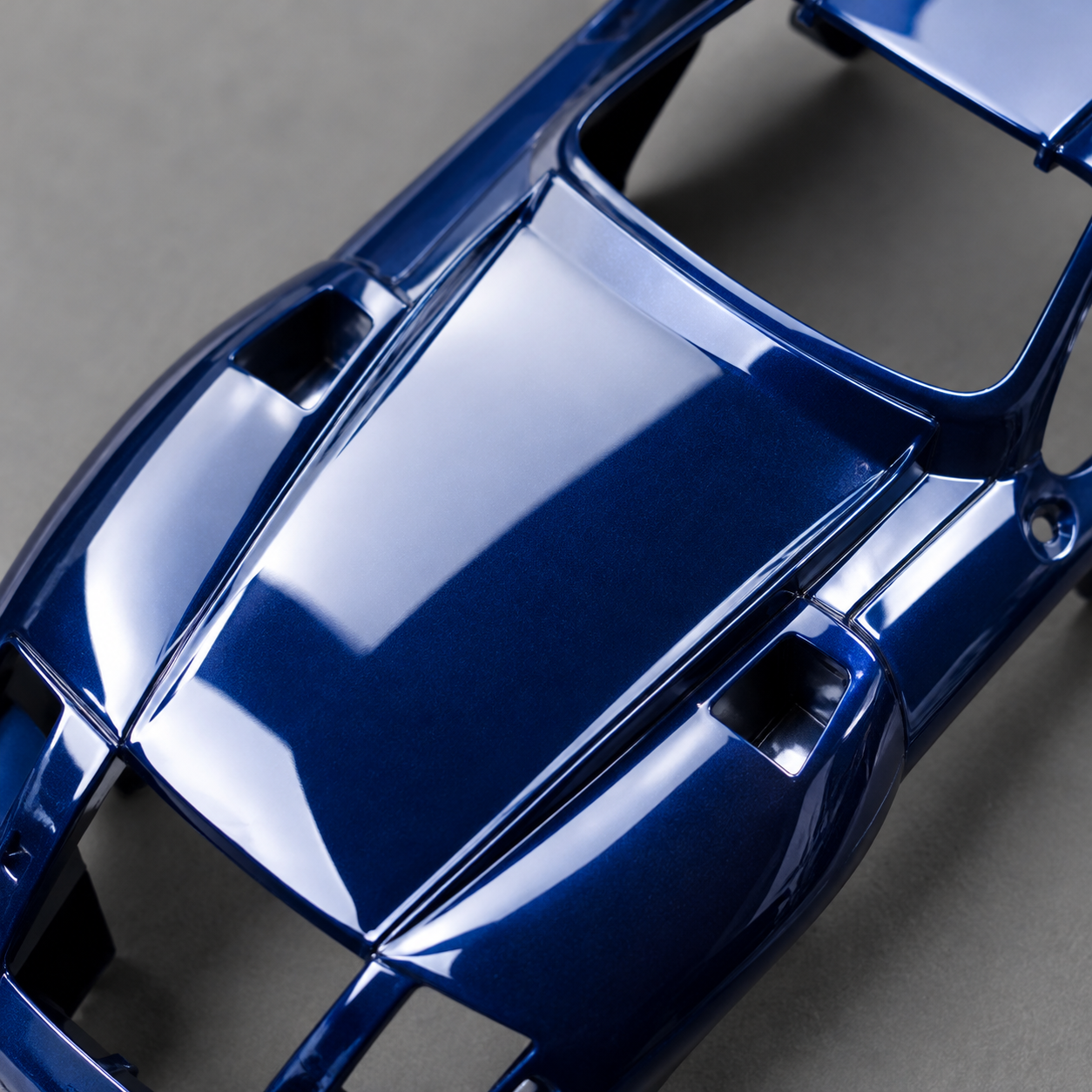
Lacquer
Solvent-based coatings, usually reduced with aggressive thinners. Resin, dry time and bond vary by product line.
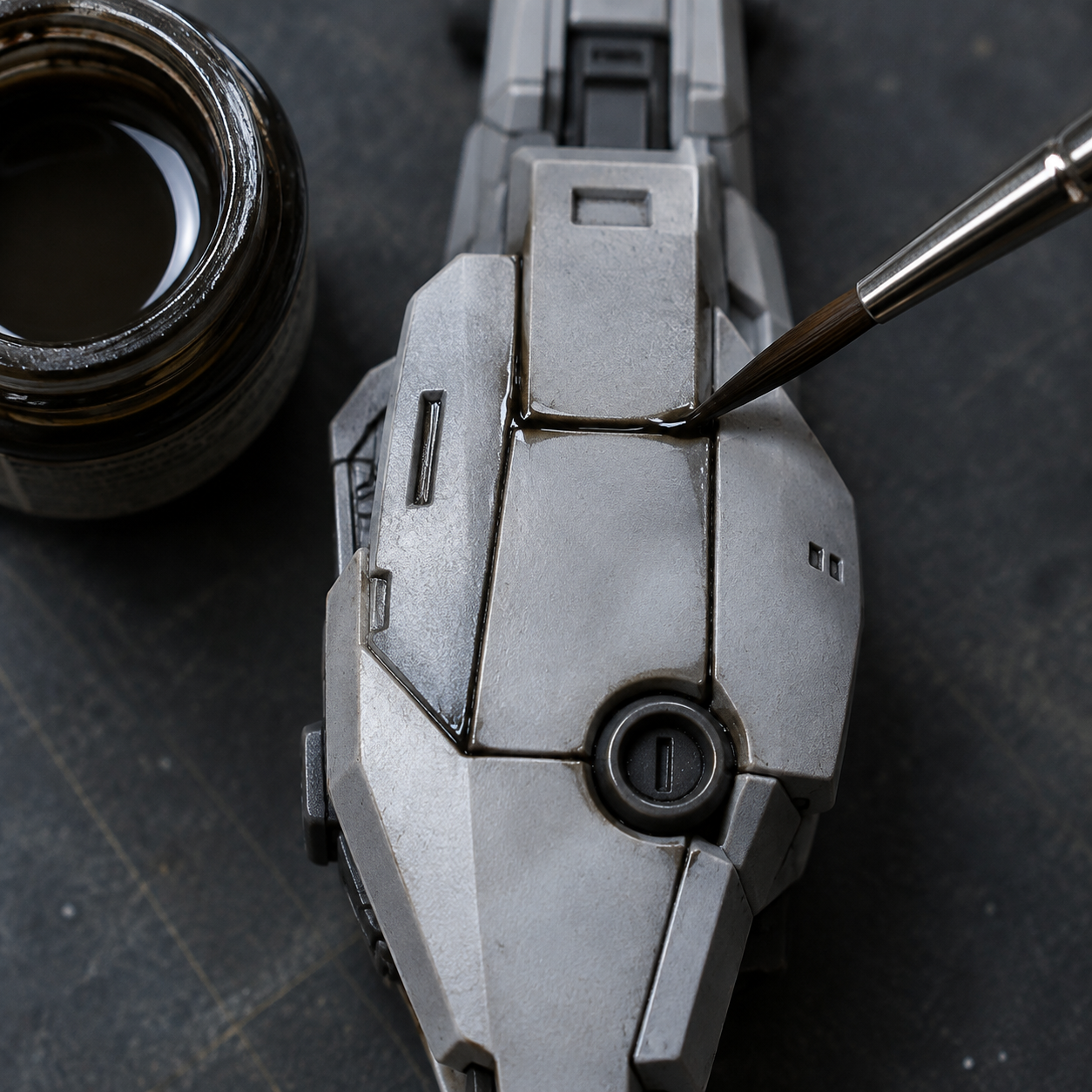
Enamel
Commonly oil- or solvent-based, with their own thinner and slower cure. Behaviour varies by line.

Acrylic
A binder family, not a carrier. Acrylic paint can be waterborne, alcohol-based or solvent-based; the exact product decides thinner and behaviour.
The LEA Mnemonic — A Limited Ordering Habit
LEA stands for Lacquer → Enamel → Acrylic. Read it as a default stack from bottom to top: lacquer at the base, enamel over lacquer, acrylic over both. It is a mnemonic, not a chemistry classification or a guarantee. Exact formulation and the maker's recoating guidance govern, and even two products in the same family remain an unknown pair until you check them.
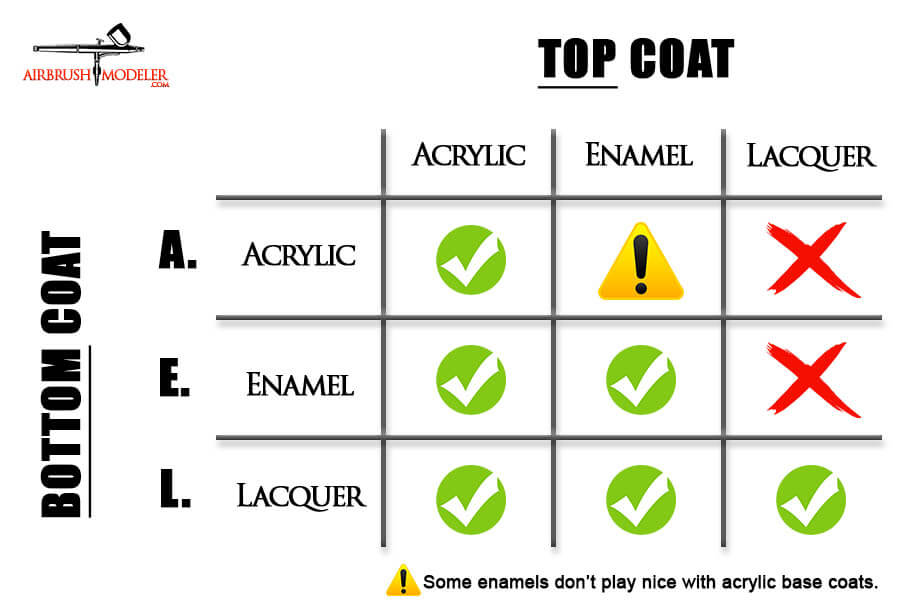
In the mnemonic, a later position is the lower-risk direction over an earlier one, and going backwards is a risk flag. Neither direction establishes compatibility: a product pair is unknown whether it follows the mnemonic, runs against it, or sits in the same family. A cured film and a painted-scrap test give evidence for this combination under these conditions; they do not turn the mnemonic into a chemical approval.
Check the product, not just the family
Two paints in the same family can use different binders, solvents, thinners and cure times, and acrylic is a binder family that can be waterborne or solvent-based. Before spraying over an existing finish, read the paint maker's directions for both products and test the combination on a scrap of painted plastic or an inner surface.
A family order that follows the mnemonic is a reason to test. It is not evidence that the two products are compatible, and it does not guarantee a result on a finished model.
How to Identify the Actual Product
The family word on the front of the bottle is not enough. Identify the exact product line from the label, then use the maker's thinner and cleanup directions for that line. "Acrylic" can be waterborne, alcohol-based or solvent-based; lacquer and enamel lines also differ in resin, thinner and cure behaviour.
| Tamiya line | Type on the label | Thinner for spraying | Cleanup and task note |
|---|---|---|---|
| Tamiya Lacquer Paint (LP) | Lacquer | Tamiya Lacquer Thinner | Clean with lacquer thinner; strong fumes, so ventilate. Fast dry suits durable base coats. |
| Tamiya Enamel Paint (X/XF range) | Enamel | Tamiya Enamel Thinner | Clean with enamel thinner. Slow open time suits washes and brush blending. |
| Tamiya Color Acrylic (X/XF range) | Acrylic | Tamiya acrylic thinner, per the label; water only if the label permits it | Clean before the paint dries. Acrylic is a binder family, not a synonym for water-based. |
Note: X and XF colour codes appear across more than one Tamiya range. Read the bottle label and the recommended thinner, not the code alone.
Published examples, not universal rules. Iwata's paint guide recommends Medea products for water-soluble paints and directs readers to the paint label or manufacturer for other materials (Iwata paint guide). GOLDEN's High Flow Acrylics sheet separates recoat tasks: further paint or medium layers often need several minutes, while isolation or varnish guidance says 12–24 hours, with some colours longer; its masking guidance says at least five minutes or longer depending on thickness and conditions. The same sheet notes some pigments are unsuited to fine nozzles or fine tips (GOLDEN High Flow product sheet). Those instructions belong to those lines and substrates, not to every model paint.
Check the LEA position before you spray
Use the interactive tool to see whether a pair follows or runs against the LEA mnemonic — and to get the product, recoat, cure and painted-scrap checks the mnemonic cannot answer.
Use the Layering Order CheckerFree tool for all model builders.
Frequently Asked Questions
What is the LEA rule in model painting?
LEA stands for Lacquer–Enamel–Acrylic. It is a limited hobby mnemonic for the order coats usually go down, not a reliable chemistry taxonomy and not a compatibility guarantee. Exact formulation and the maker's recoating guidance govern; acrylic can be waterborne or solvent-based, and even two products in the same family are an unknown pair until checked.
Can I spray lacquer over acrylic paint?
The LEA mnemonic treats this as going backwards, so it is a risk flag — not proof that the specific products are incompatible. Acrylic may be waterborne or solvent-based, and lacquer reducers vary. Check both makers' directions, the acrylic's cure state and film thickness, and test the pair on painted scrap. Running against the mnemonic is not by itself a reason to strip the model.
Is acrylic always water-based and mild?
No. Acrylic describes the binder, not the carrier. Acrylic paints can be waterborne, alcohol-based or solvent-based, and a solvent-based acrylic or aggressive reducer can attack a film underneath. Read the exact product's label and thinner directions rather than assuming the family word tells you the chemistry.
What type of paint is Tamiya XF-series?
Tamiya sells separate enamel and acrylic ranges, and both use XF/X colour codes. Read the bottle label for the paint type and the recommended thinner rather than relying on the code alone.
How long should I wait between coats when mixing paint types?
Follow the maker's stated recoat window for the product underneath. Temperature, film thickness, thinner and the exact line change the time, so a general "overnight" rule is only a starting point. Confirm the window in the maker's directions and test the combination on painted scrap.