What an airbrush tutor actually does
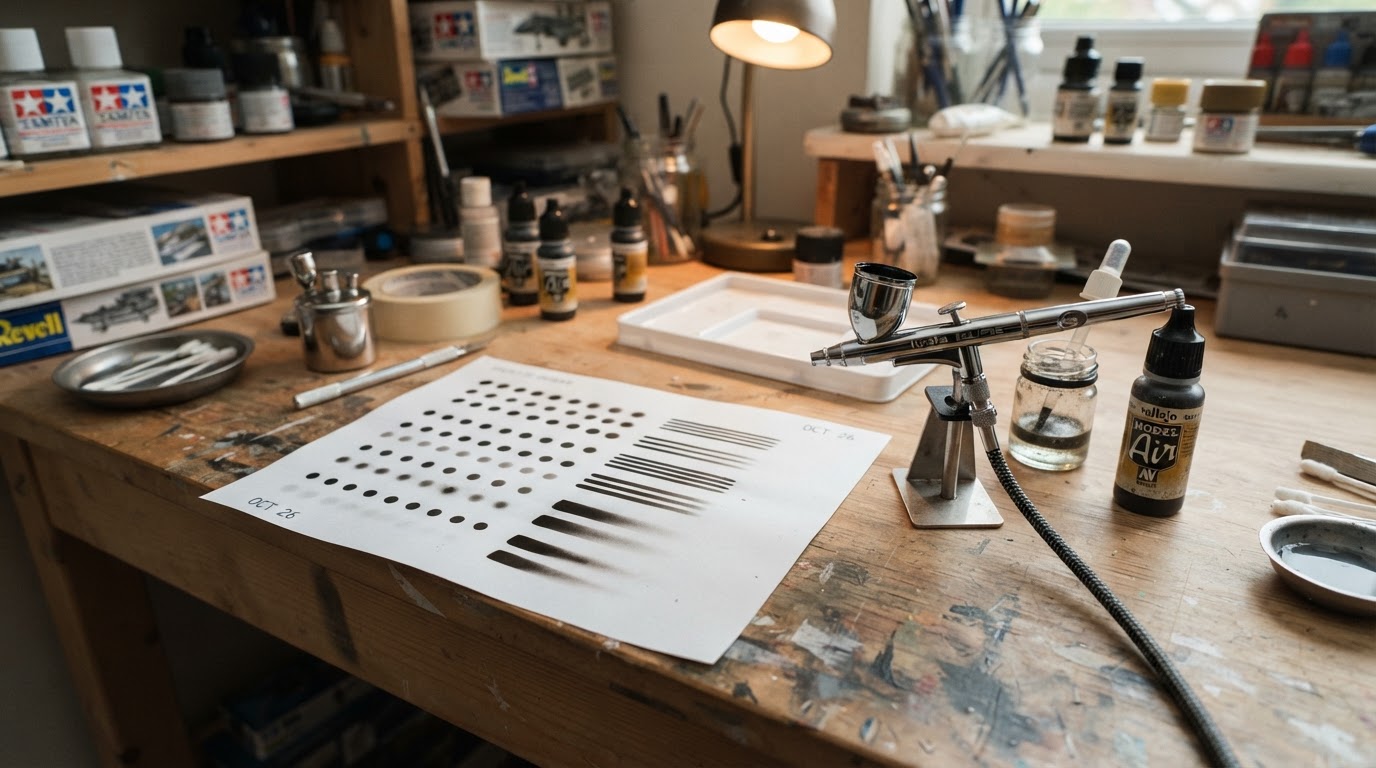
An airbrush tutor is someone who watches you spray and corrects the habits that cause splatter, rough coats, and dry tip before they become automatic.
Most beginners do not lack information; they lack feedback. Video tutorials show a skilled hand at work, but they cannot tell you that your trigger is creeping, your paint is slightly too thick, or that you are holding the brush too far from the surface. A tutor can, and that correction is where the value comes from.
In a typical lesson, a tutor will:
- Watch you spray on practice surfaces or a scrap model and name what is going wrong.
- Change one variable at a time — pressure, thinning, distance, or trigger control — so you can feel the difference.
- Give you a short practice routine to repeat between lessons.
- Answer gear questions against your actual setup rather than in the abstract.
That combination — diagnosis, correction, and a practice plan — is what separates a lesson from another tutorial.
Key answers at a glance
The short answers: a tutor teaches technique through feedback, beginners benefit most, in-person suits hands-on learners, online suits busy schedules, and the first skills to learn are trigger control, thinning, and pressure.
- What an airbrush tutor offers: personal diagnosis and correction of your spraying technique, plus structured practice.
- Who it suits: complete beginners, hobbyists upgrading from rattle cans, and anyone stuck on a specific fault such as spatter or a grainy finish.
- In-person vs online: in-person for hands-on equipment help and immediate correction; online for flexibility and a wider choice of tutors.
- What to learn first: trigger control, paint thinning and air pressure, and cleaning routines.
- What it costs: rates vary by tutor, format, and region — ask for current pricing directly rather than trusting older figures.
- Before you book: confirm the tutor teaches your subject, can show recent work, and explains how feedback is delivered.
Who gets the most from lessons
Beginners and returning hobbyists get the most from a tutor; experienced modellers usually gain more from short, targeted coaching on one specific problem.
The strongest cases for booking a lesson:
- You have just bought your first airbrush or compressor and want to start with correct habits.
- You are moving up from rattle cans and need to learn thinning, pressure, and even coverage.
- You can spray a base coat but keep hitting the same fault — spatter, tip dry, or a rough, grainy finish.
- You have a model show or club deadline and want your finish work reviewed before the event.
- You want to learn a specific skill such as fine line work for panel lines or a smooth clear coat.
If you already spray consistently and only need new ideas, free tutorials may be enough. Paying a tutor makes the most sense when you need a second pair of eyes on your technique.
In-person vs online airbrush lessons
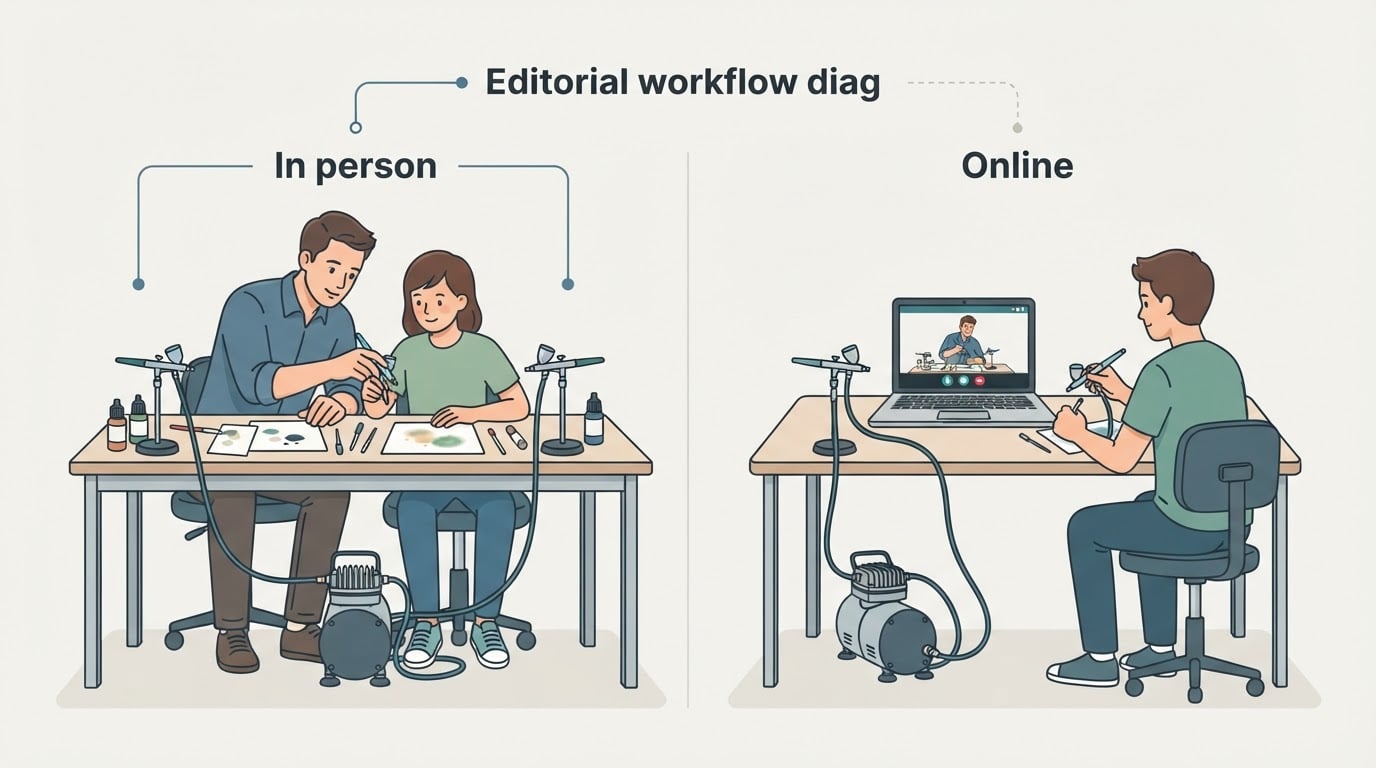
Choose in-person lessons when you need hands-on correction and equipment help; choose online lessons when scheduling, location, or rewatch value matters more.
Consideration | In-person lessons | Online lessons |
|---|---|---|
Feedback | Immediate, physical correction of your grip and trigger | Spoken and visual feedback through a camera |
Equipment | Often provided, or you can use the tutor's bench | Usually your own airbrush, paint, and compressor |
Scheduling | Fixed times, local travel | Flexible times, tutors from anywhere |
Best for | First-ever lessons, gear troubleshooting | Refreshers, isolated learners, specific techniques |
Whichever format you choose, ask how much of the session is hands-on. A lesson that is mostly demonstration is a lecture; a lesson where you spray, get corrected, and spray again is practice, and practice is what changes your results.
Many learners combine both: a single in-person session to fix the fundamentals, then occasional online check-ins while they work through a project at their own bench.
What to learn in your first lessons
Your first lessons should cover trigger control, pressure and thinning, and cleaning, because every other skill builds on those three.
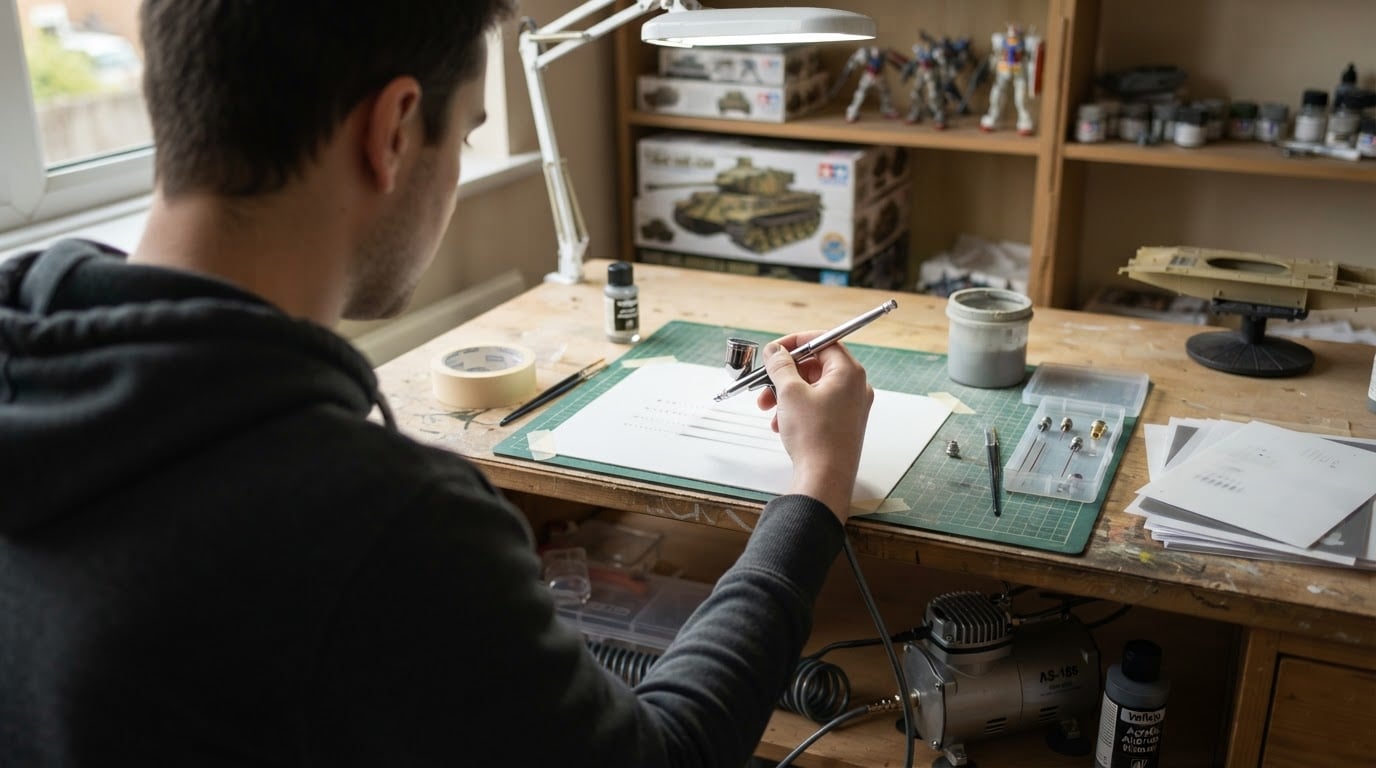
- Trigger control. Start with dots, thin lines, and overlapping passes on plastic card. The goal is steady, deliberate movement rather than speed.
- Pressure and thinning. Learn how air pressure, paint viscosity, and spraying distance interact, and how to recognise the difference between paint that is too thin and pressure that is too high.
- Distance and overlap. Practise holding a consistent distance and overlapping each pass evenly so coverage stays smooth.
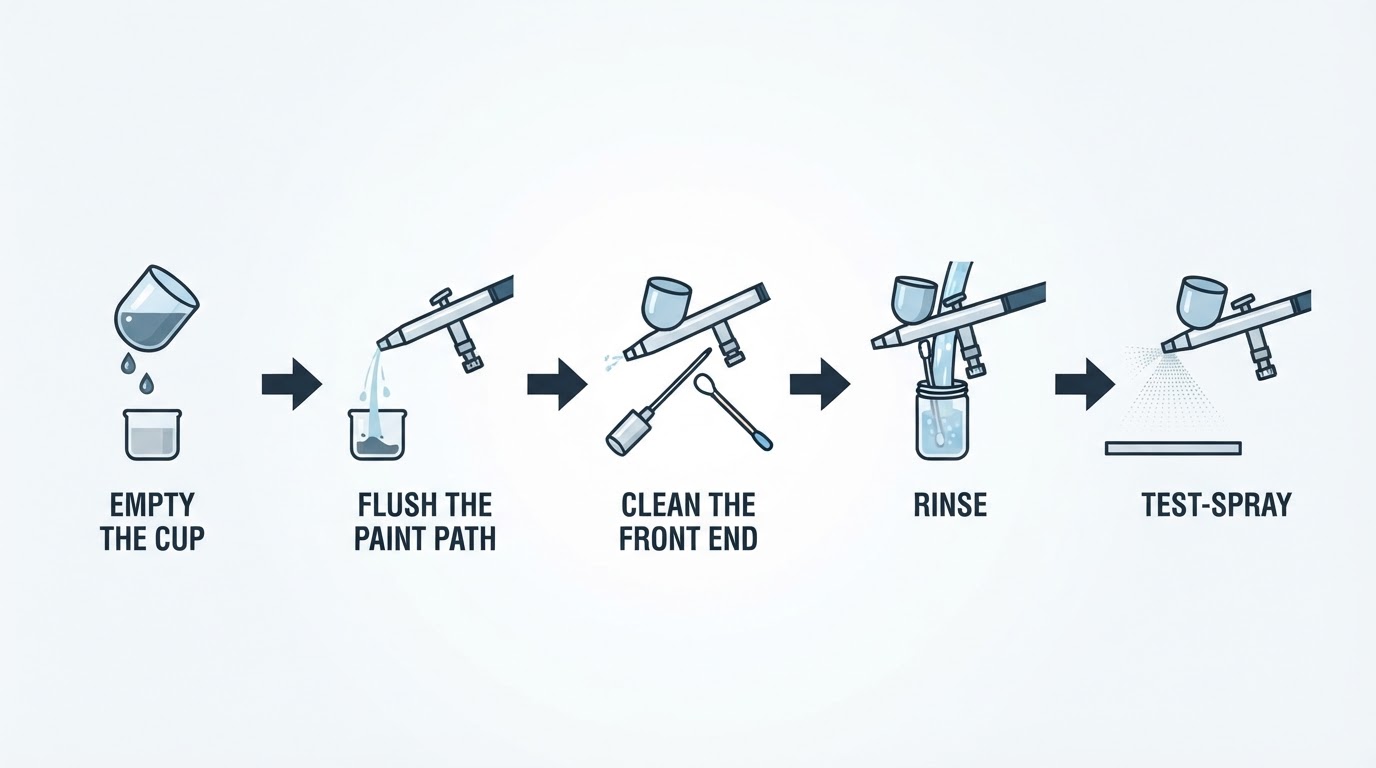
- Cleaning and maintenance. Learn a flush routine, what to do about tip dry, and how to keep the air supply dry.
- Applying it to a model. Move from practice card to primer, base coats, masking edges, and detail work once the basics feel repeatable.
If you already own an airbrush, bring it to the lesson and learn on your own gear. Skills transfer better when the tool in your hand feels the same at home.
How to find an airbrush tutor near you
Start with model clubs, hobby shops, art schools, and model shows; local networks often know who teaches before any directory does.
Ways to find someone qualified:
- Scale model clubs. Members frequently know who teaches locally, and club nights are a low-pressure way to meet them.
- Hobby shops. Staff often know local artists and may host clinics or know who runs them.
- Community colleges and art centres. Adult education programmes sometimes include airbrushing or general painting courses.
- Model shows and competitions. Demonstrators and judges are often practising artists who also teach.
- Local airbrush artists. Automotive, custom-painting, and t-shirt shops use airbrushes daily, but confirm they teach scale-model technique if that is your goal.
- Tutor marketplaces and online listings. Useful when your area has no local option, but check the tutor's subject and recent work before booking.
Online courses and free tutorials: what to expect
Online courses and free videos are excellent for demonstration and repetition, but only live feedback can correct what you are doing wrong.
General learning marketplaces such as Skillshare host structured airbrush classes, dedicated course sites such as Airbrush University offer airbrushing-specific lessons, and YouTube holds a large free library of tutorials. All three are useful, and all three share one limitation: the teacher cannot see your work.
Use them well by treating them as a complement to practice, not a substitute for it:
- Pick courses that match your subject — scale models and miniatures need different technique from automotive or cake decorating work.
- Look for instructors who explain pressure, thinning, and trigger control rather than only showing finished results.
- Check whether feedback is included; some courses offer critique, most do not.
- Watch a free tutorial first if you are unsure about a paid course.
Because prices and course catalogues change constantly, compare current listings directly instead of relying on figures from older articles.
How to check a tutor before you book
Ask for recent work in your subject, a lesson plan, and how feedback is delivered; a good tutor answers all three without hesitation.
Questions worth asking:
- Can you show recent work in my subject area?
- Do you teach complete beginners, and how do you structure a first lesson?
- Will I spend most of the session spraying, or watching?
- Should I bring my own airbrush, paint, and compressor?
- What are the most common beginner mistakes you correct?
- How do you handle follow-up questions after the lesson?
The trade-off most beginners miss
A highly skilled artist and a good teacher are not the same thing — choose the tutor who can explain and correct beginner mistakes, not simply the one with the most impressive portfolio.
Watch for these warning signs:
- The tutor cannot explain why a fault happened, only that you should "do it again".
- The lesson is almost entirely demonstration, with little time for you to spray.
- The teaching ignores your equipment and assumes professional gear.
- There is no practice plan, so progress depends entirely on paid sessions.
A methodical teacher with solid, relevant work will move you further than a brilliant artist who cannot translate skill into instruction.
Where Airbrush Modeler fits
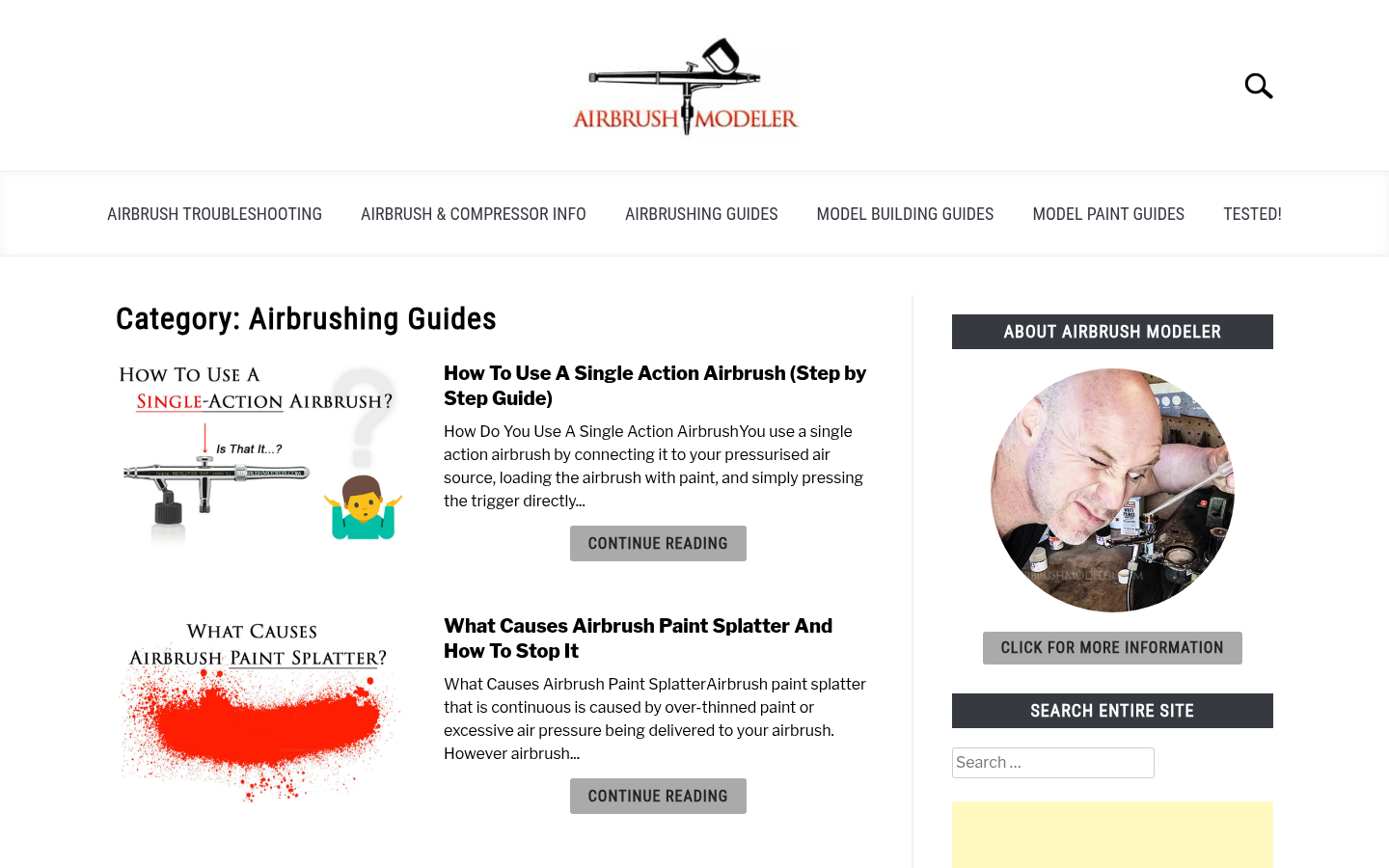
Airbrush Modeler is an independent airbrushing reference for scale model builders that pairs well with lessons: its step-by-step technique guides cover the act of spraying so you arrive at a lesson with better questions.
Airbrush Modeler publishes answer-first, procedural guides for scale modellers — covering the single-action airbrush workflow from connecting an air source and loading paint through trigger control, along with dedicated articles on double-action operation and fine-detail line work. Used between lessons, it is a reference for reviewing the skill you practised and preparing the next question, not a replacement for a tutor's eyes on your work.
Felo product screenshot.
FAQ
Is an airbrush tutor worth it? Yes, if you are stuck on a specific fault or have never used an airbrush; structured feedback shortens the trial-and-error stage considerably. If you already spray consistently, targeted coaching on one skill may be enough.
Do I need my own airbrush before taking lessons? Not always. In-person lessons often provide equipment, while online lessons assume you have your own setup. Ask before you book, and if you already own an airbrush, learn on it.
Can I learn airbrushing entirely online? You can learn technique and theory online, and many people do. Adding at least one live session with feedback helps you avoid entrenching bad habits.
Are online lessons cheaper than in-person ones? Rates vary by tutor, format, and region, and they change over time. Compare current quotes rather than assuming one format is always cheaper.
How long does it take to learn airbrushing? Progress depends on how much you practise between lessons. Focus on steady, repeatable control first; fine detail and finish work come with deliberate practice rather than a fixed number of hours.
What should I bring to my first lesson? Bring your own airbrush, paint, and compressor if you have them, plus a model or plastic card to practise on. Ask the tutor in advance what else they recommend.