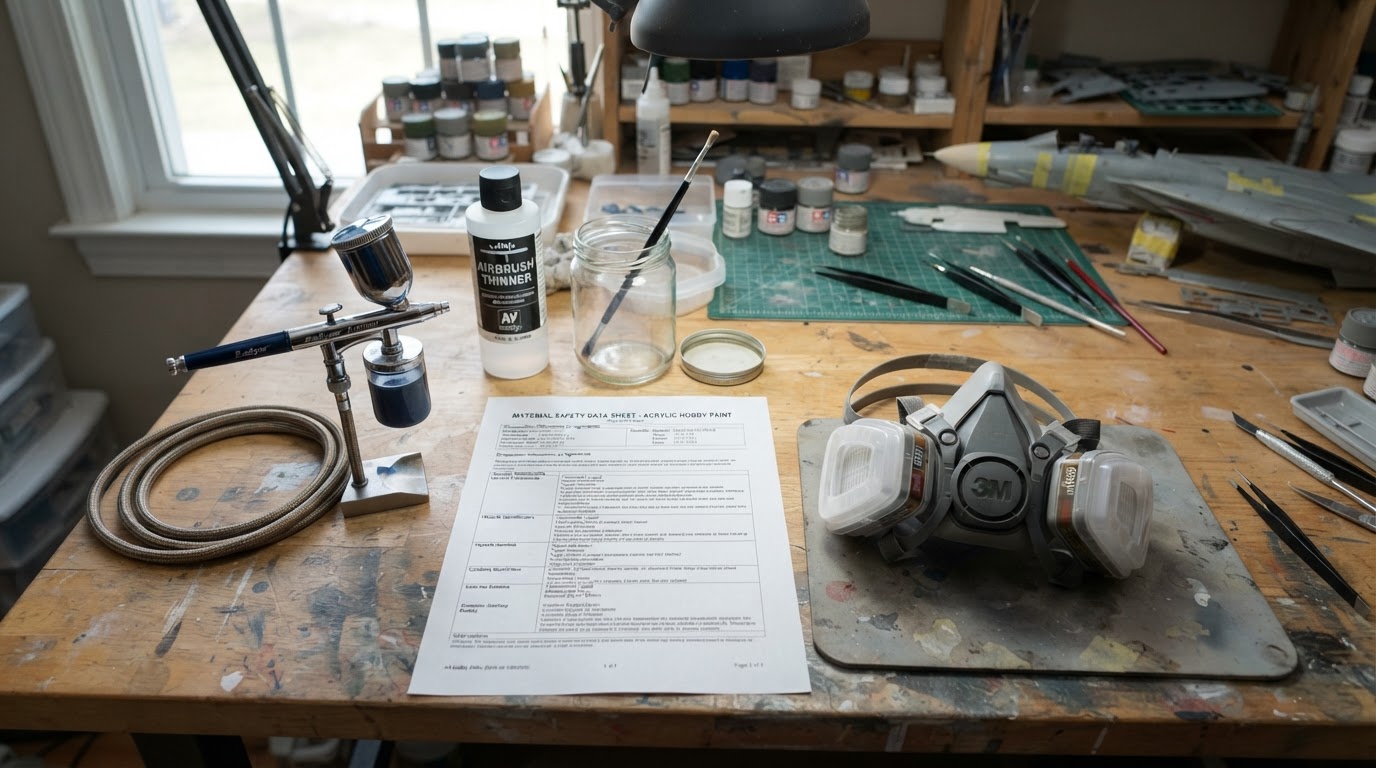
Which pot the CL310 filter is made for
Iwata sells the filter under the part number CL310, and the CL300 replacement filter page names the pot it belongs to: the CL 300 Universal Spray Out Pot. The same page states plainly that the filter is not compatible with the older NAC 201 spray out pot.
That one match answers most of what a buyer needs, and it explains why the search feels murky. These filters are sold by part number against a specific pot, so "airbrush cleaning pot filter" is not a shelf of interchangeable parts. The filter and the pot are separate items, which means owning a spray-out pot does not by itself tell you which filter goes in it.
Confirm the pot you own before you order
Read the model from something that actually identifies the pot: a marking on the pot itself, the lid or base, the retail box, the manual that came with the setup, or the order record for that exact purchase. The comparison is then simple. A CL300 is the Universal Spray Out Pot and takes the CL310; anything that traces back to the older NAC201 sits outside the filter's stated compatibility, and the order stops there.
Appearance does not settle it. Two spray-out pots can share a lid style, a glass jar and a general silhouette and still be different models, and the filter is specified against the model rather than the look. A listing photo, or a seller who describes a filter as fitting cleaning pots in general, is not evidence that it fits the pot in front of you. If the pot carries no readable number, work back through the order history or the dealer's listing for that exact unit; if that trail is gone, the model number is the missing piece, and a filter bought before you find it is a guess.
Check the part you are paying for as well: CL310, which Iwata describes as a replacement filter rather than a complete pot.
What "fits most airbrushes" refers to
Iwata's Universal Spray Out Pot page describes the CL300 by its parts: a holder that fits most gravity-, side-, siphon- and trigger-style airbrushes, a glass pot the manufacturer lists as dishwasher-safe, and a removable protective sleeve.
The airbrush compatibility belongs to the holder, the part that carries the brush over the pot. It says nothing about the filter crossing over to another pot, Iwata's or another maker's. A seller who repeats "fits most airbrushes" for the whole pot is passing on a statement about the holder, and that statement can be true while the CL310 remains tied to the CL300.
What the pot does, and what the maker does not rate
A spray-out pot gives you somewhere to spray during cleaning, so the overspray and the dirty rinse land in a container instead of the room or the model.
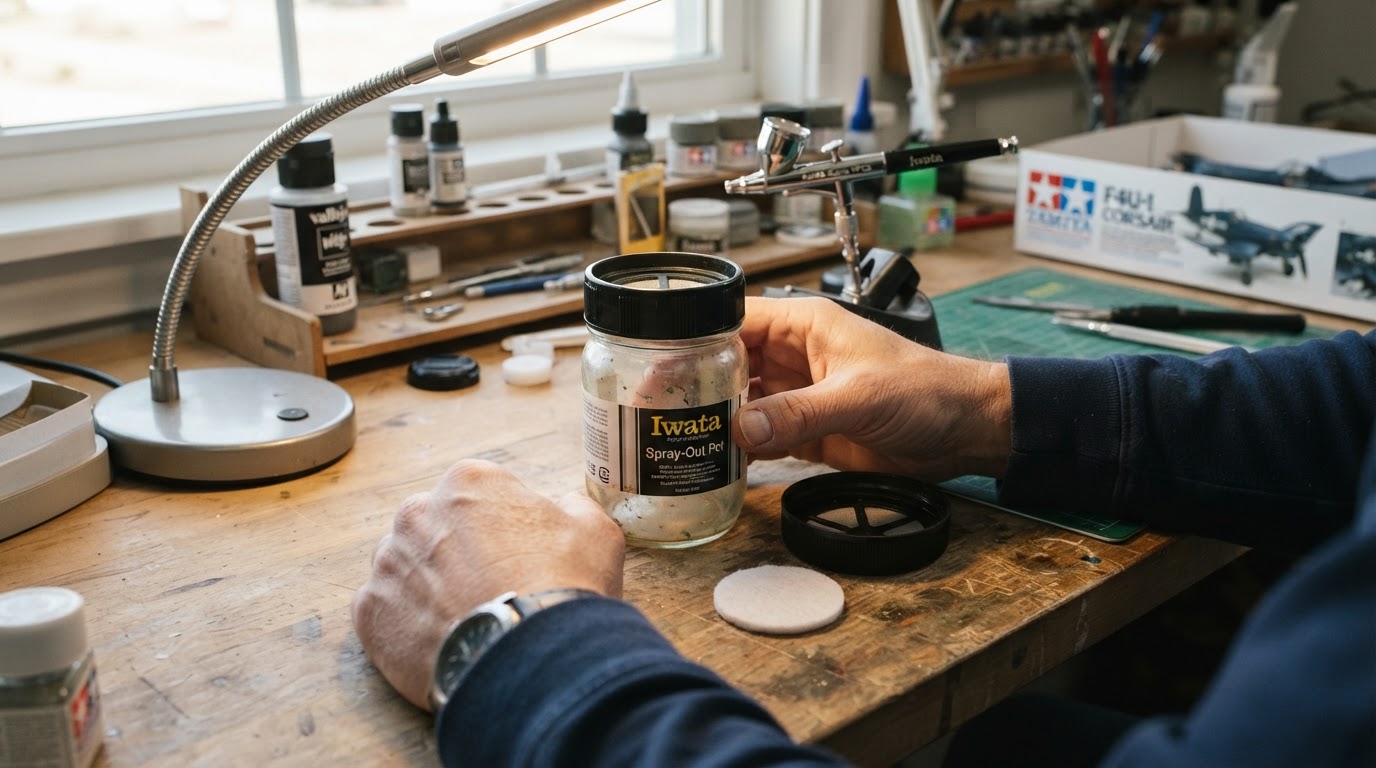
Iwata presents the CL300 as cleaning equipment that holds that overspray, not as an exhaust or filtration appliance with a rated performance standard, and neither product page turns the filter into one either.
So the pot is not a spray booth and not a respirator. Keep following the cleaner manufacturer's label and your usual ventilation practice while you work, whichever pot is on the bench.
The paint-passage side of the job is a separate routine: the site's step-by-step airbrush cleaning routine covers flushing the brush, cleaning the cup and deciding when a teardown is actually needed.
Maintenance details that stay model-specific
Iwata lists the glass pot as dishwasher-safe. That statement covers the glass pot; neither page says the filter, the lid or the complete pot assembly can go through a dishwasher, so do not extend the claim to parts the manufacturer did not name.
Nor do these two product pages give filter dimensions, washing or reuse instructions, or a replacement interval. A figure for any of those comes from somewhere other than the pages that define the part.
Installation follows the maker's assembly instructions. A correctly specified filter or foam element can involve normal resistance as it seats, so resistance by itself does not identify a wrong part. What matters is whether it fits as the instructions describe: if it does not, stop there instead of forcing an incompatible part into the pot. Keep the pot's vents and openings clear rather than covered.