All Posts
Browse all blog posts
Iwata HP-TH vs HP-TH2 Fan and Round Air Caps: Match the Part
HP-TH and HP-TH2 use different fan and round air cap numbers, and each model has its own cap cover. Check the model marking and the current parts diagram before ordering.
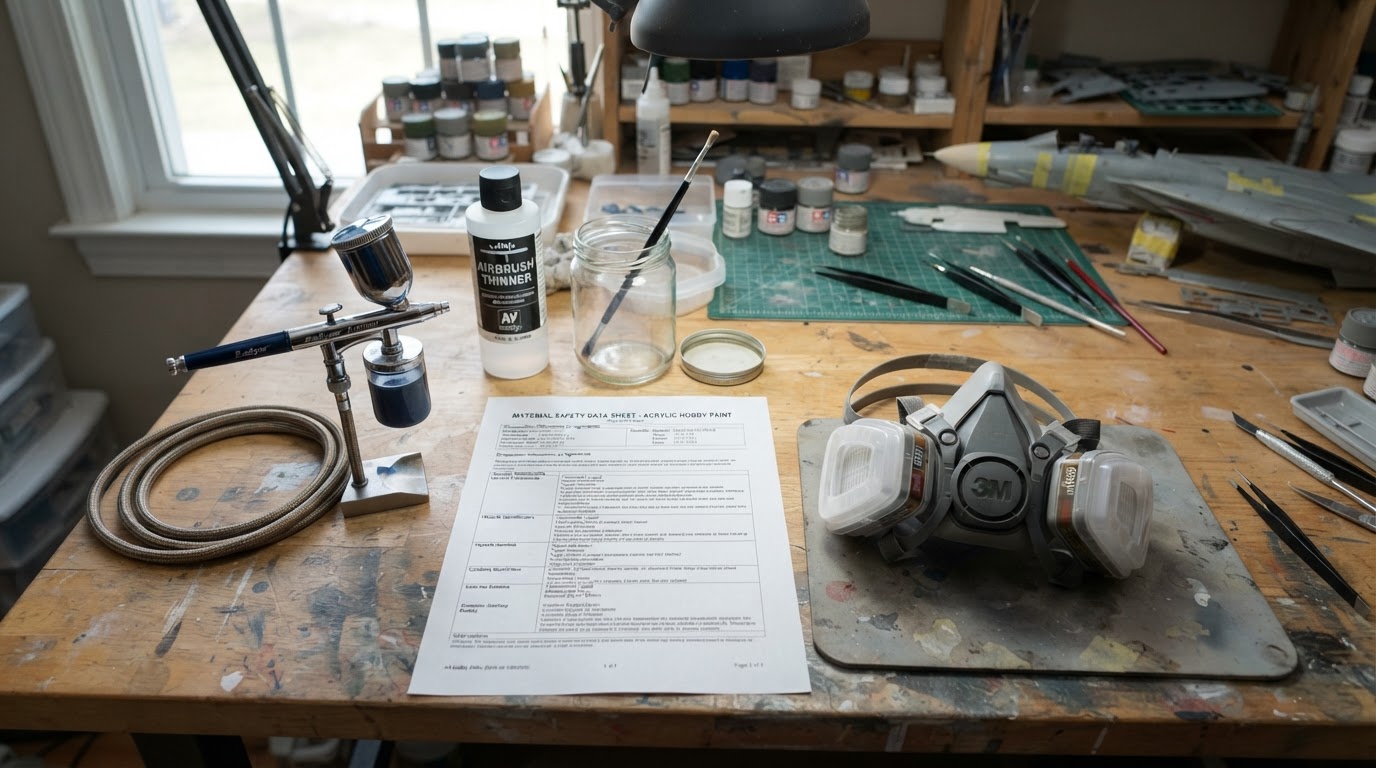
P100 vs Organic Vapor Filters for Airbrushing
P100 describes particle filtration; an organic vapor approval covers specified vapors. Read the difference, combination labels and the paint-specific information needed before choosing protection.
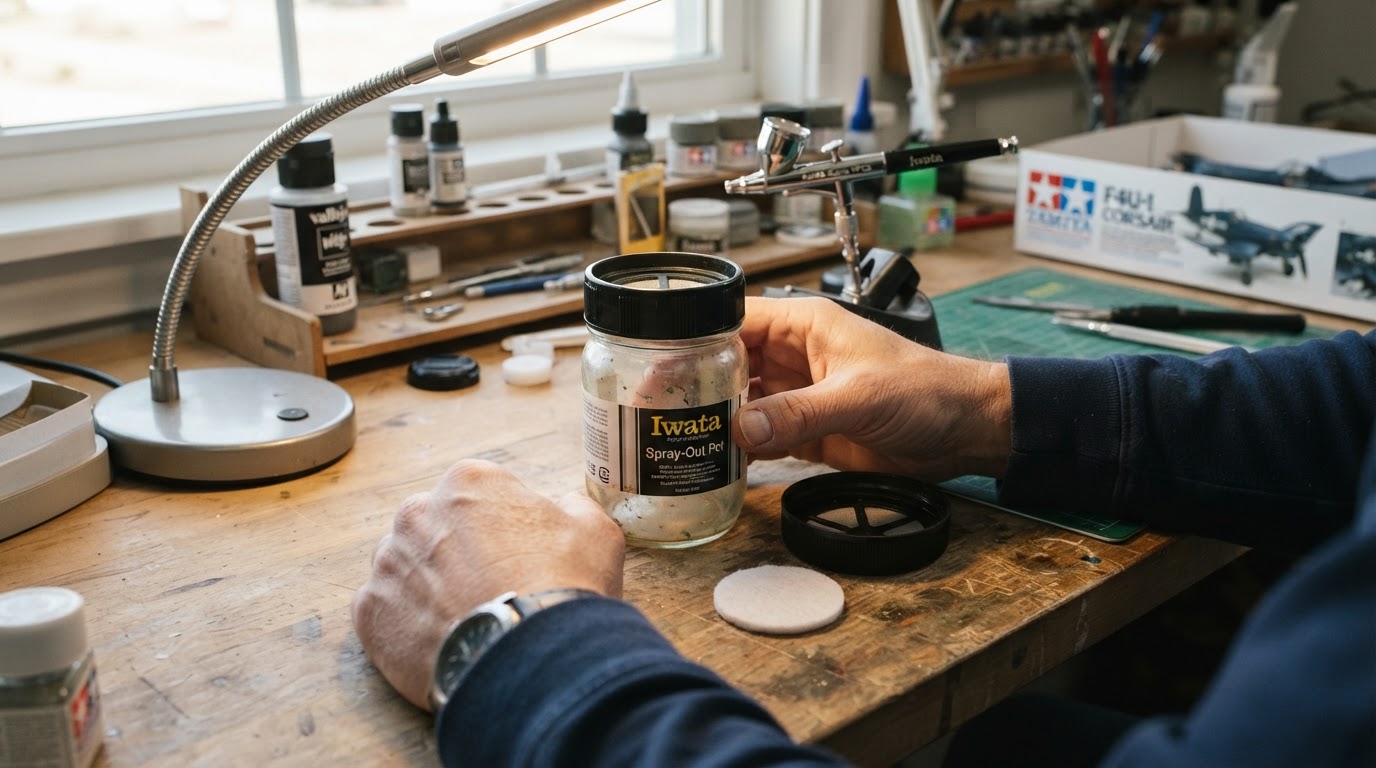
Iwata Cleaning Pot Filter Replacement: CL310 Fits the CL300, Not the NAC201
Iwata's CL310 is the replacement filter for the CL300 Universal Spray Out Pot and is not compatible with the older NAC201. How to confirm which pot you own before ordering, and which maintenance details Iwata leaves to the model.
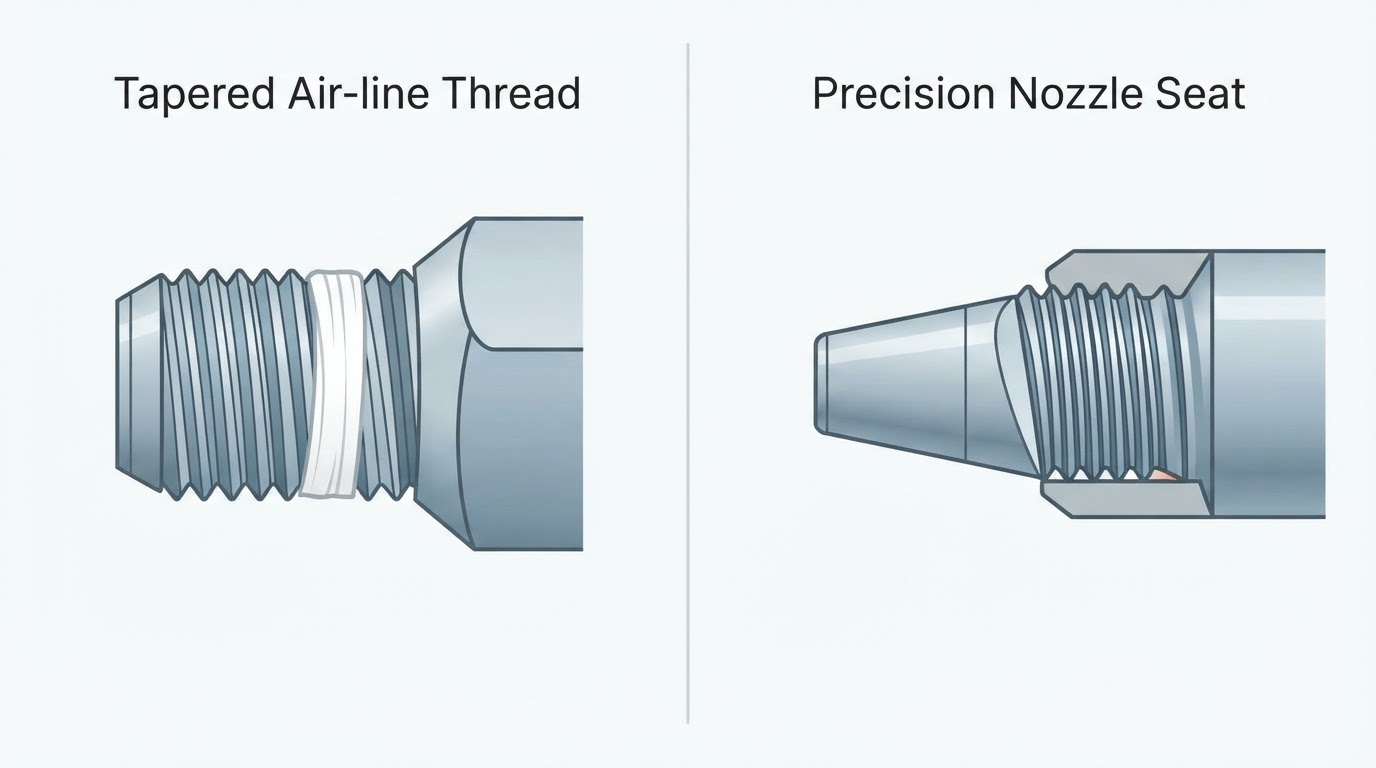
PTFE Tape on Airbrush Nozzle Threads? Check the Seal First
Compressor thread tape and a paint nozzle ask for different seals. What Iwata documents for threaded nozzles, cap threads, and the Eclipse's compression-fit nozzle.
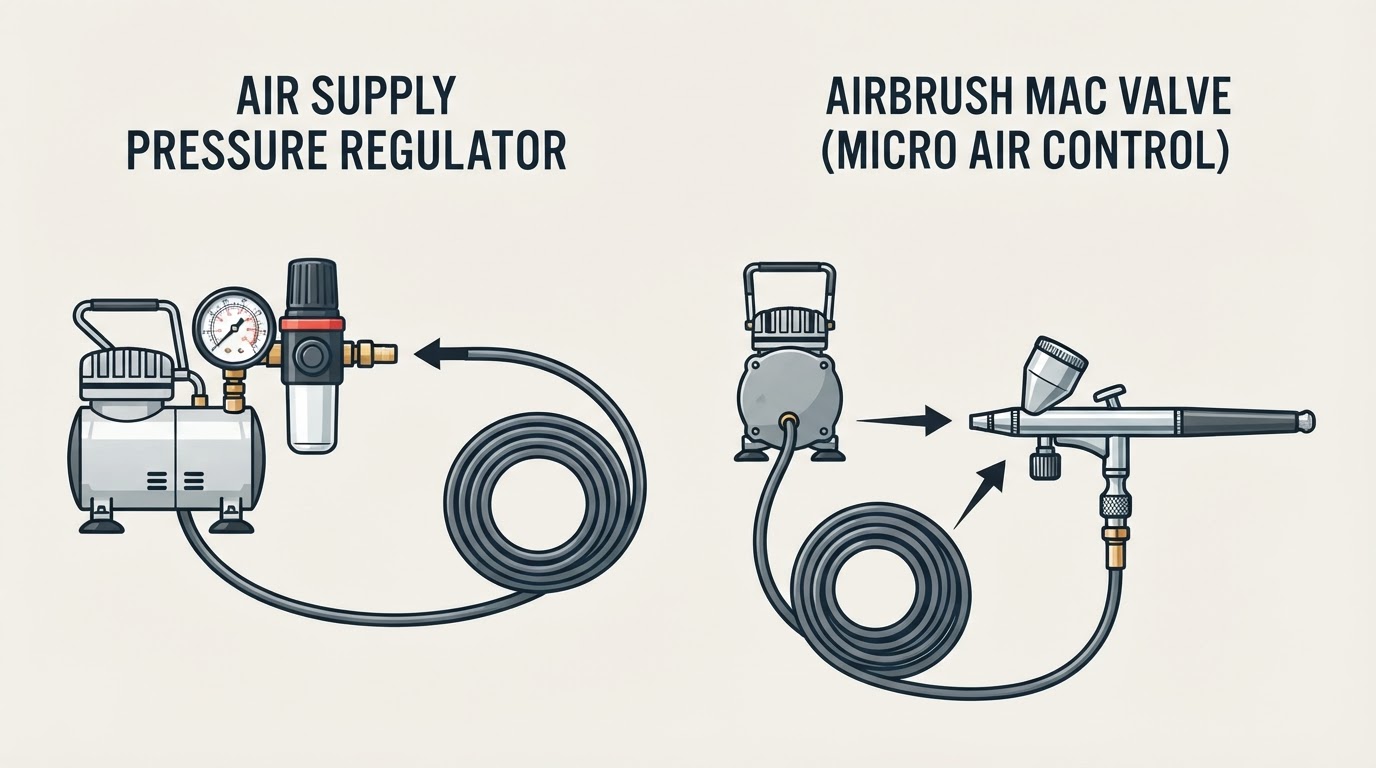
Airbrush MAC Valve vs Regulator: Which One to Adjust
A MAC valve trims airflow at the airbrush while the regulator sets supply pressure at the compressor. Use them in that order, and know what a MAC cannot fix.
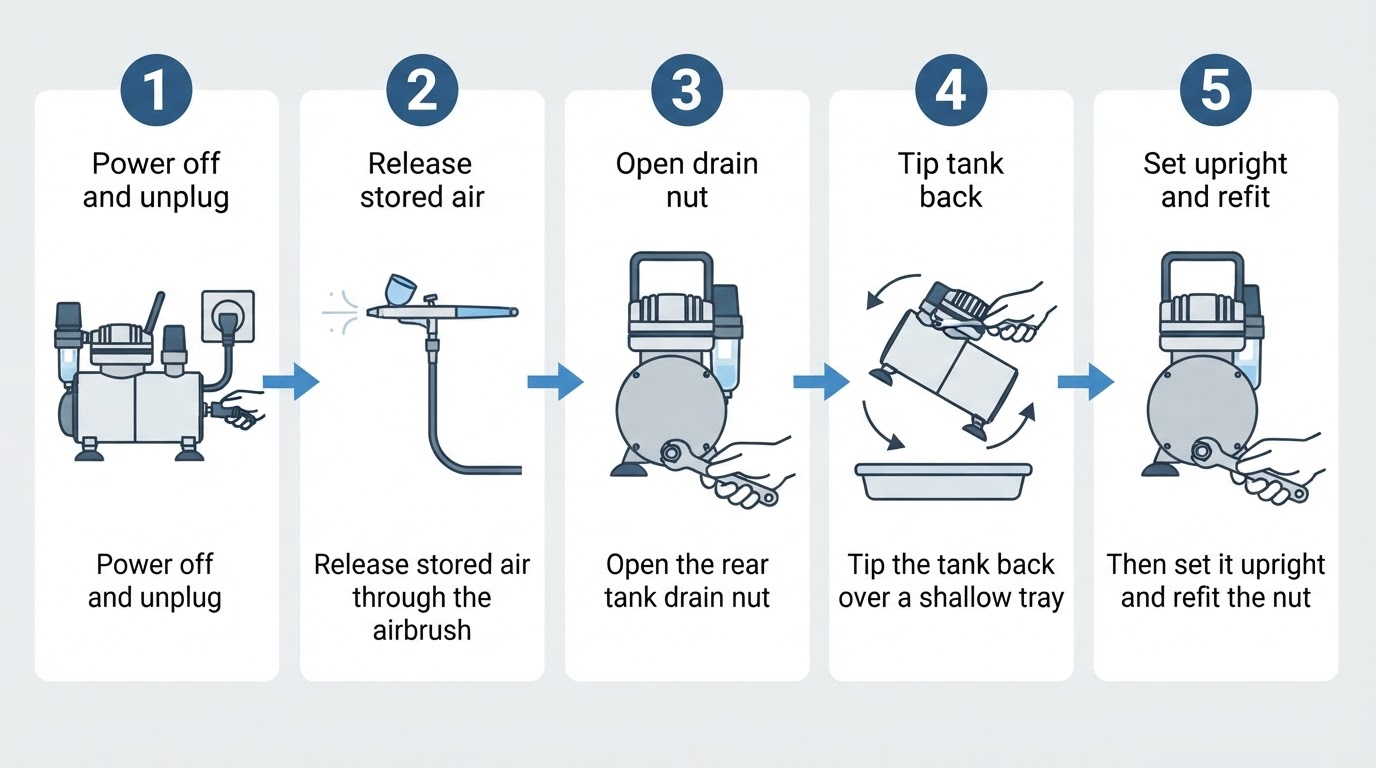
How to Drain an Airbrush Compressor Tank Safely
Find the storage-tank drain, release pressure safely, and drain collected condensation without mistaking it for the moisture filter. Includes model-specific steps.
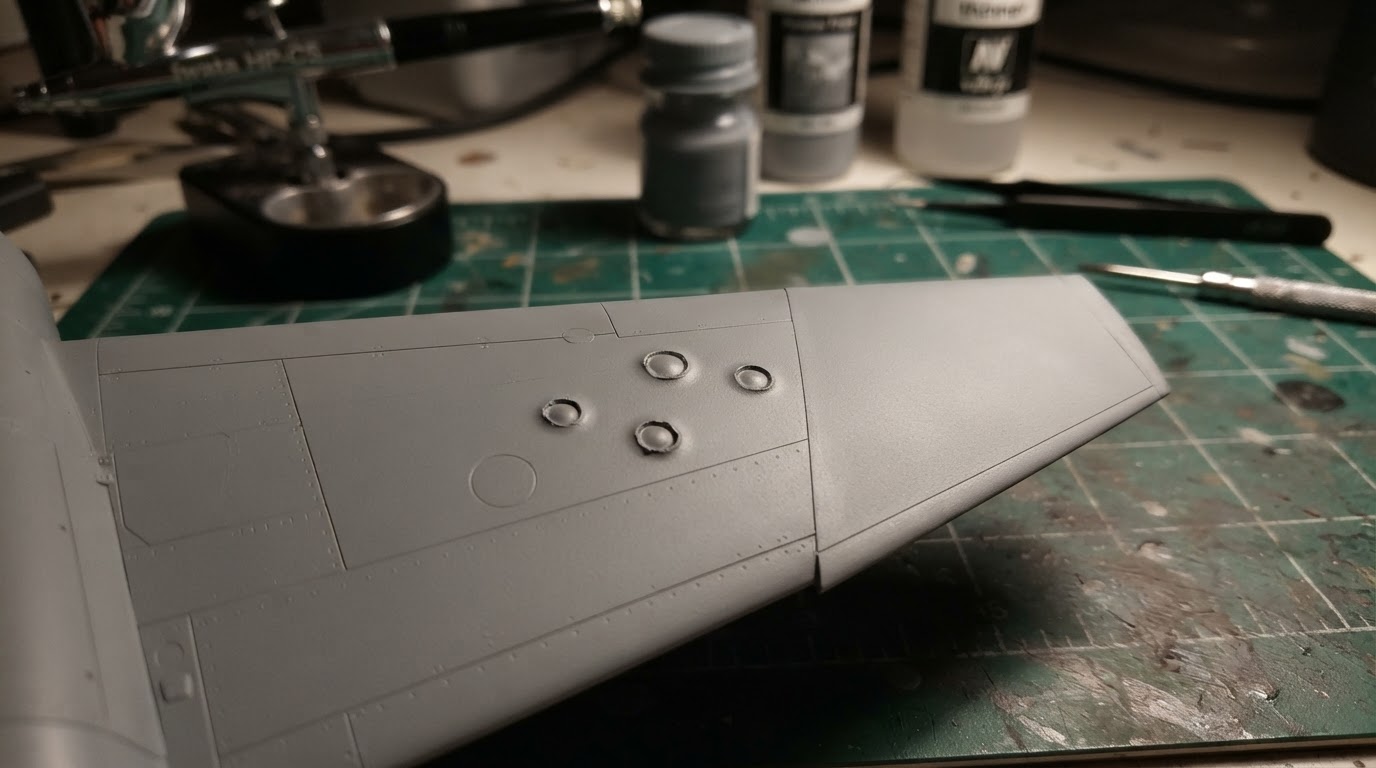
Why Airbrushed Model Paint Forms Fisheyes
Airbrush fisheyes on models appear as isolated craters where the wet film pulled away. Check the part, the mix and the air path, then compare results on matched scrap before changing spray settings.
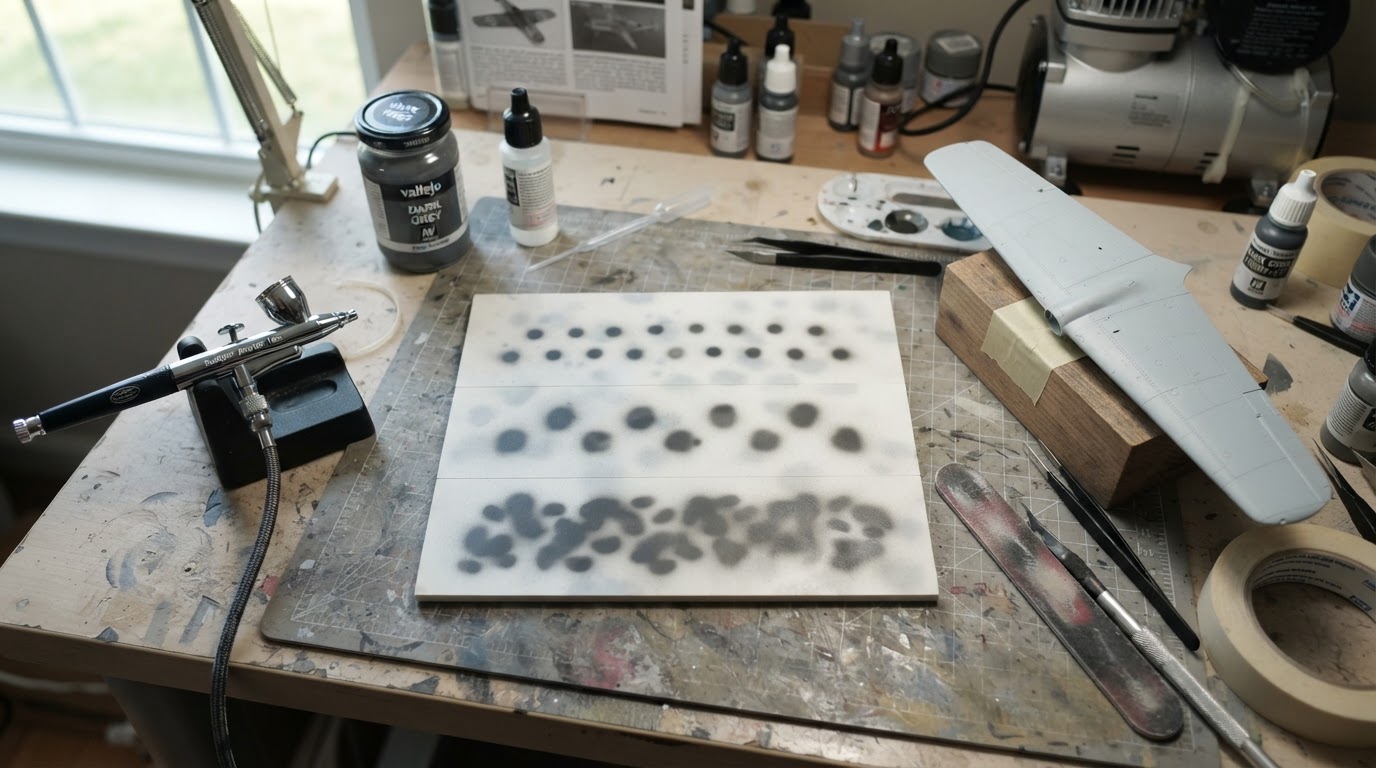
Airbrush Mottling Camouflage: Practice Small Freehand Patches
Build mottled camouflage patch by patch on scrap first: size the reference pattern, change one spray variable at a time, place patches unevenly, and stop before they merge.
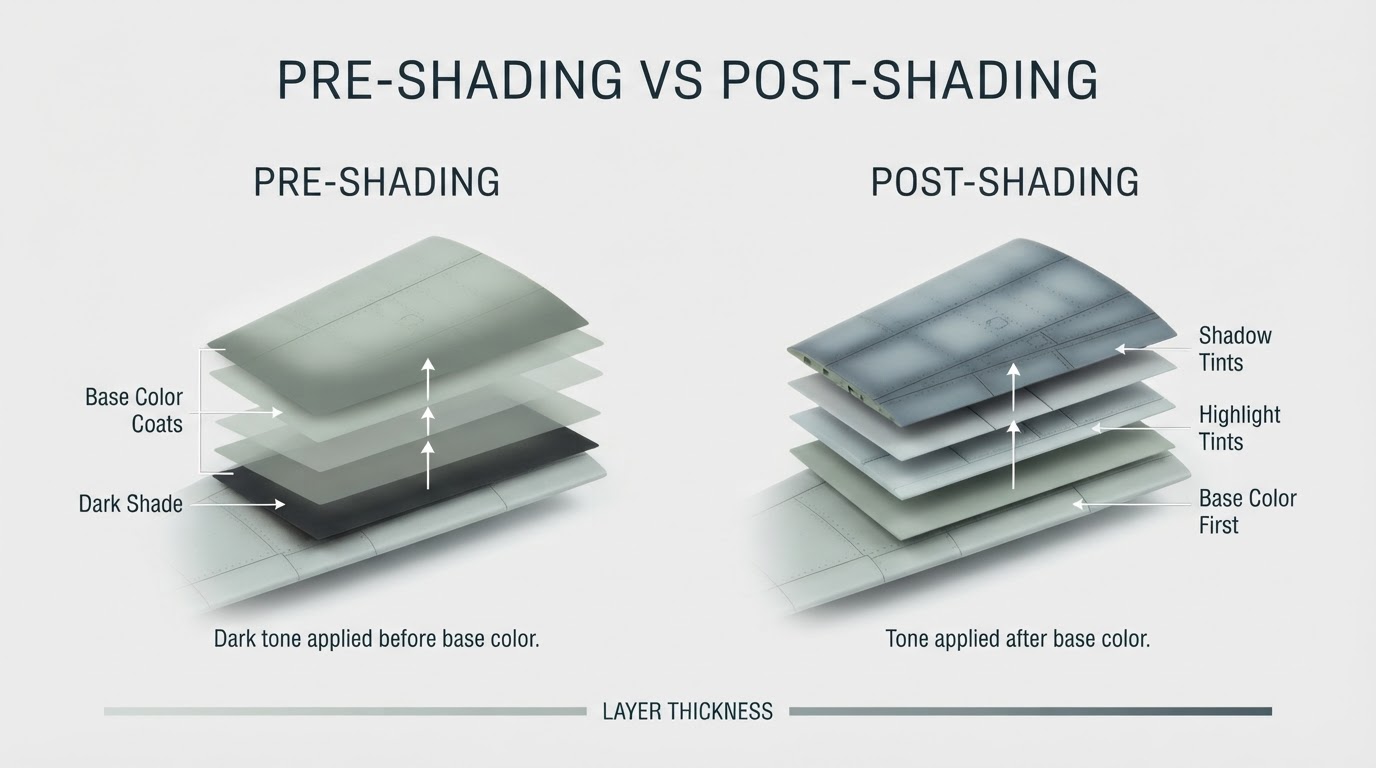
Pre-Shading vs Post-Shading Models: Choose the Painting Stage
Pre-shading puts tonal variation under later color coats; post-shading adds it over a finished surface. Compare stage, opacity and correction, then test on scrap.