The short answer: yes for details, no for full coverage
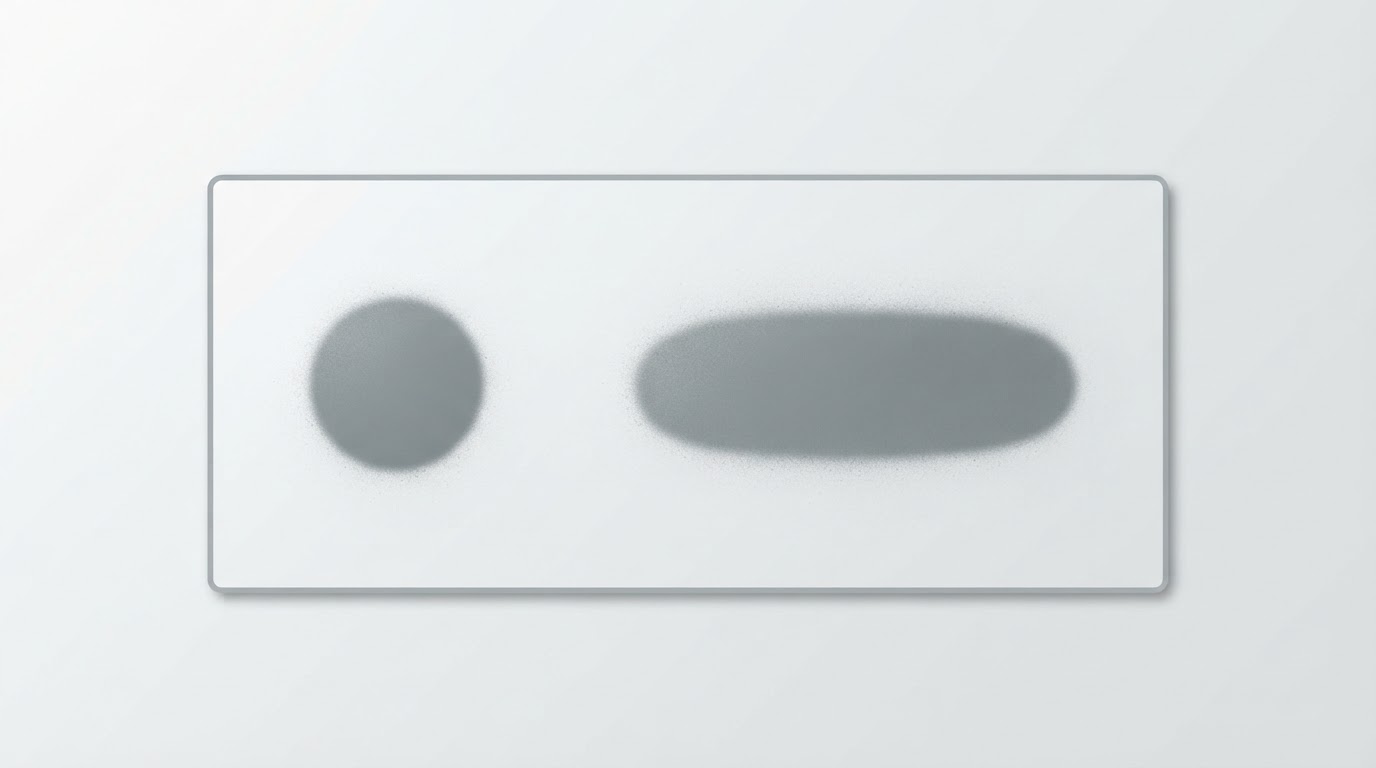
Airbrush paint is mixed to flow through a nozzle, not to sit on a brush. A brush lays a thinner, more uneven film than spray, so the real question is whether the finish is good enough to keep.
For detail work, Vallejo's own Model Air basic use guide says the range can also be used with a brush for small details or camouflage spots, applying several thin coats. That confirms brush use for detail; it does not mean every airbrush color will cover a whole tank.
Large flat surfaces — an aircraft wing, a car body, a tank hull — are better served by brush-formulated paint. Airbrush paint gets there eventually, but the extra coats, drying time and brush marks add up.
Why brushed airbrush paint behaves differently
- The film is thin. Airbrush-ready paint is finely ground and mixed at a low viscosity so it can atomize. Under a brush it delivers little pigment per pass, so tone builds slowly.
- It dries fast. Water-based acrylics start to skin over as you work. Going back over half-dry paint drags it and leaves ridges.
- It settles unevenly. Brush direction, hand pressure and how much you load all show up as streaks that a sprayed coat would hide.
Water-based acrylic versus solvent-based airbrush paint
The two families behave differently, and the product label is the authority for both.
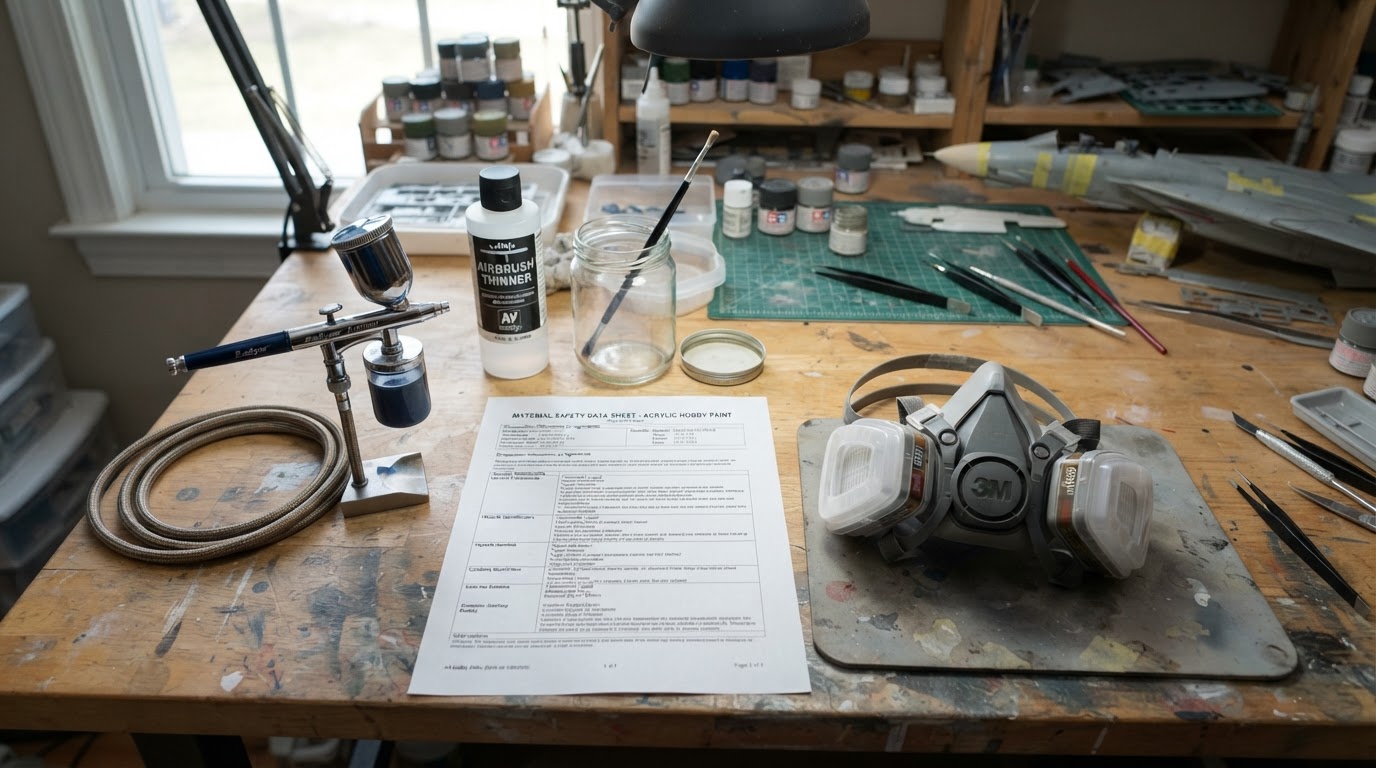
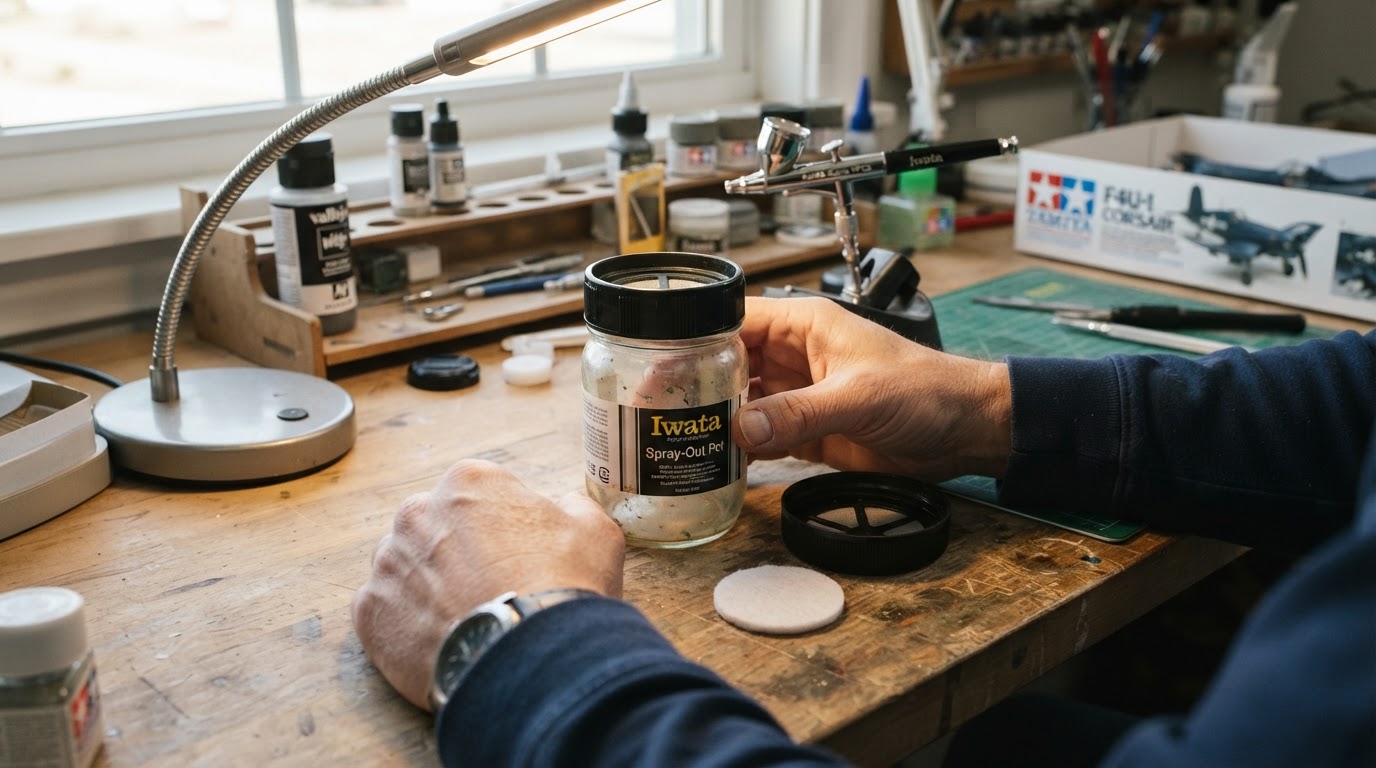
Water-based acrylics are the usual choice for brush work on models. While wet they generally rinse from the brush with water or the maker's airbrush cleaner, and they have little solvent smell — but ventilation and cleanup still follow the label.
Solvent-based airbrush paints need their own thinner and cleaner, and they usually call for stronger ventilation, gloves and eye protection. They can also bite into the coat underneath: brushing a hot solvent paint over cured acrylic can soften it, so test the pair first.
If the label does not authorize brush application or name a thinner, do not improvise with household additives; unverified mixes can ruin the film or create a safety problem.
For the reverse task—preparing a brush-formulated acrylic for spraying—see the Model Color airbrush-thinning guide. It is a different formulation and workflow.
Prepare the surface before you brush
Brushed airbrush paint has little film build, so it shows every flaw underneath:
- Wash the model to remove mold release and finger oils.
- Give glossy plastic, resin or metal a primer coat so the thin paint has something to grip.
- Let the primer cure fully. Wet primer and fast-drying acrylic do not mix.
- Keep your hands off the primed surface. Skin oils are enough to make the next coat crawl.
Patch test before you commit
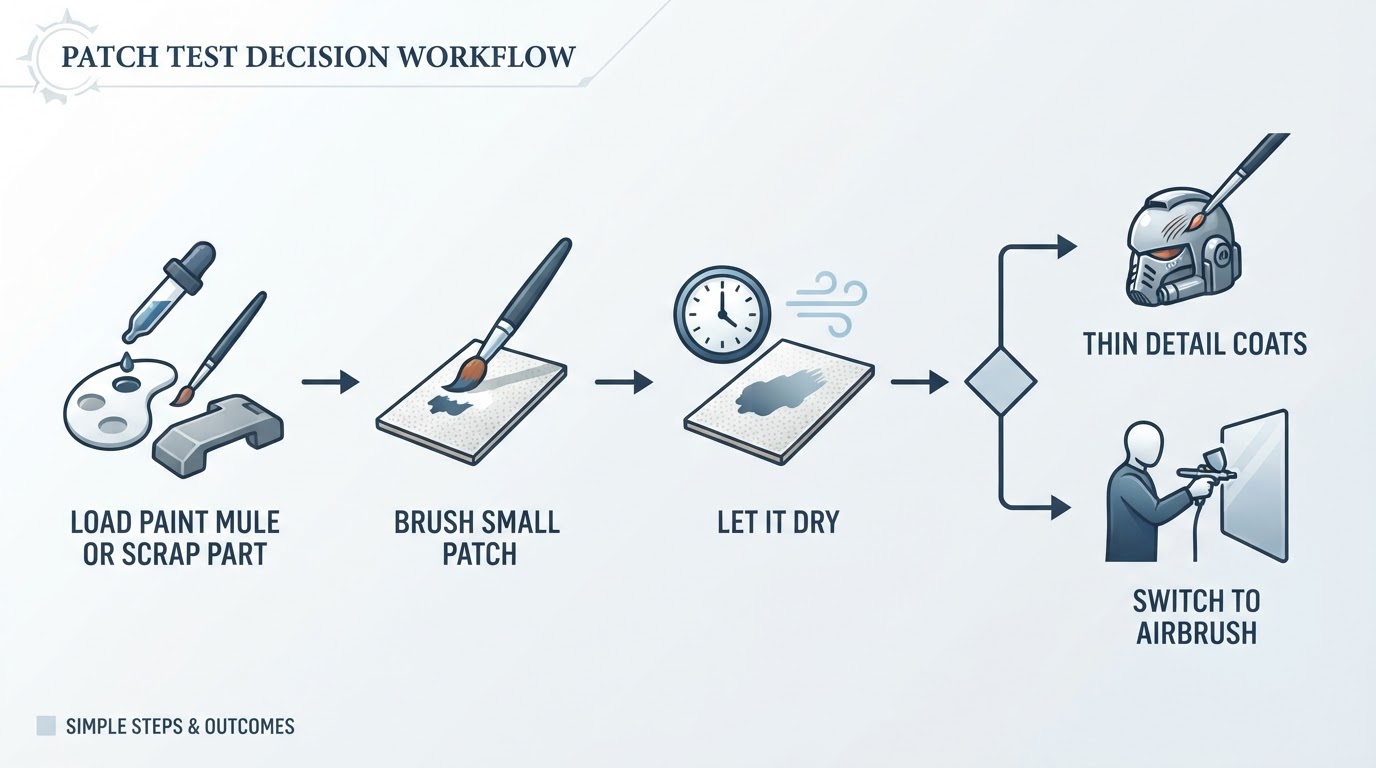
Do not learn the paint's behavior on the model. Test on a paint mule — a scrap of primed plastic, an old spoon or a spare part:
- Shake the bottle as the label directs, then load a small amount.
- Brush a patch the size of a coin, using the same stroke and thickness you plan to use on the model.
- Let it dry completely. Water-based acrylics can look dry in minutes but still be soft underneath.
- Check four things: coverage, brush marks, adhesion with a light fingernail scrape, and whether the paint lifted or crazed the layer below.
- Completion standard: two or three thin coats should give an even tone with no ridges. If the patch still looks patchy or streaky at that point, that color is a spray job.
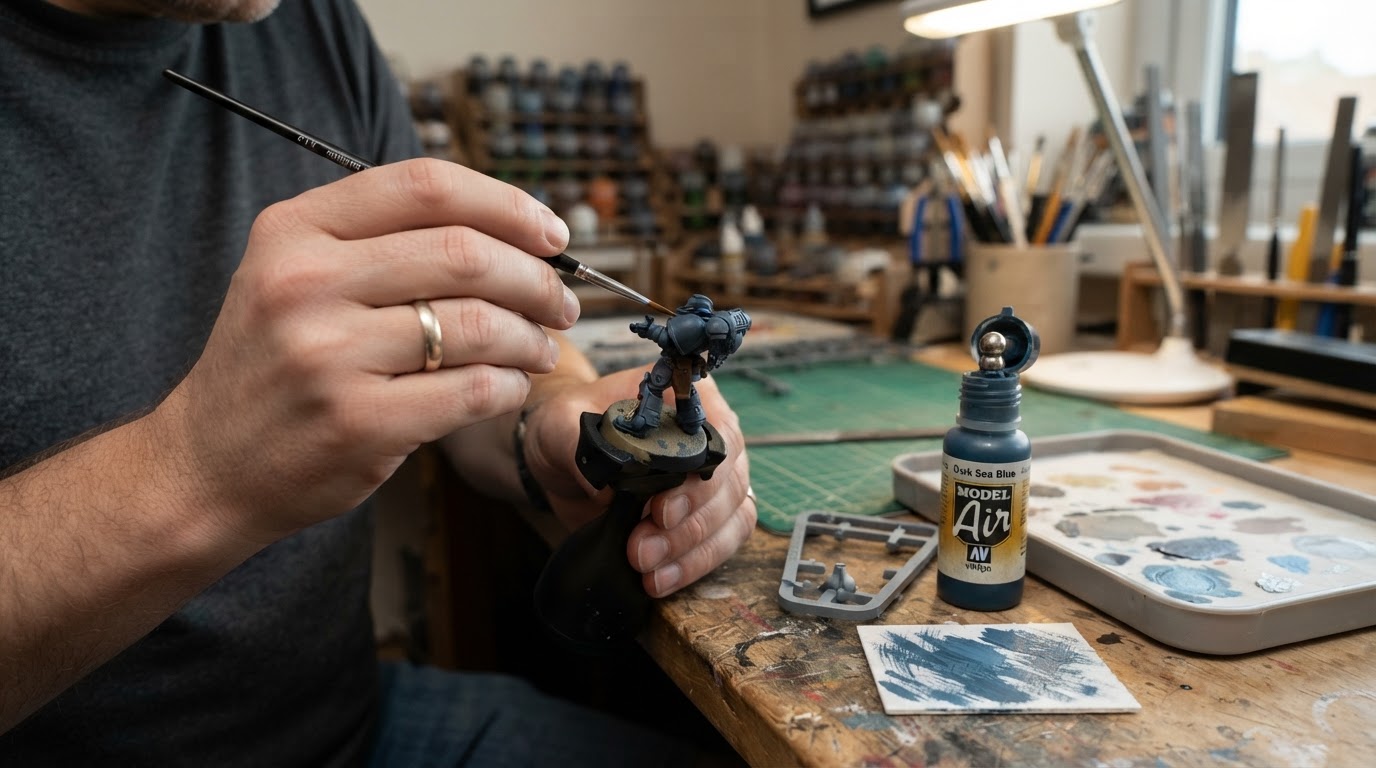
How to brush airbrush paint without wrecking the finish
- Load lightly. Dip only the lower third of the bristles so paint does not flood the ferrule.
- Work in one direction. Short, even strokes cover more evenly than scrubbing back and forth.
- Do not rework tacky paint. Let a coat flash before touching it again; if it drags, stop and wait.
- Build two to four thin coats rather than one wet one. Thin coats dry fast, keep detail sharp and hide brush direction better.
- Clean the brush as you go. Use the cleaner named on the label, and do not let acrylic dry in the bristles.
- Stop while it still looks thin. Airbrush paint covers gradually, and the last coat often looks worse while wet than it does after drying.
Decision table: brush it or spray it
Job on the bench | Better method | Why |
|---|---|---|
Eyes, buckles, cockpit details, unit markings | Brush | Small areas hide brush marks; cleaning one brush beats masking for a spray pass. |
Touch-up after a sprayed coat | Brush | Feather the repair into the dried coat without re-masking. |
Whole miniature or large flat panels | Spray | Thin paint brushed over a large area dries streaky and uneven. |
Transparent, white or metallic colors over big areas | Spray | These colors show every brush stroke and need many coats by hand. |
Solvent-based airbrush paint in a small unventilated room | Do not use it there; move to a suitable ventilated workspace | The label controls compatible thinner, protection and cleanup. |
A paint whose label says airbrush only | Neither | Manufacturer instructions override any general advice. |
Limitations to keep in mind
- Not every airbrush paint suits brush work; some lines, and some colors within a line, are formulated for spraying only.
- Coverage by brush is slower and thinner, so whites, yellows and transparents can need many coats.
- Solvent-based products carry ventilation and skin-contact requirements that the product label defines, not a forum post.
- Do not add unverified additives. If the label does not name a thinner, flow improver or retarder for brush use, leave it out.
FAQs
Can you use Vallejo Model Air paints with a brush?
Yes, for small details and camouflage spots. Vallejo's basic use guide says Model Air can be applied with a brush using several thin coats, even though the range is formulated to spray straight from the bottle. Treat it as a detail and touch-up tool rather than a full-coverage brush paint.
Do you need to thin airbrush paint before brushing it?
Usually no. Airbrush paint is already mixed thinner than brush paint, and adding more can make the coverage worse. If the paint drags or dries on the brush too fast, follow the label's own thinner or retarder guidance instead of guessing at a mix.
Why does brushed airbrush paint dry streaky?
Because the film is thin and semi-transparent, brush direction and uneven loading show through. The fix is more thin coats, fully dried between passes, rather than one heavier coat that leaves ridges and pulled patches.