What buyers usually mean by Point Zero Airbrush
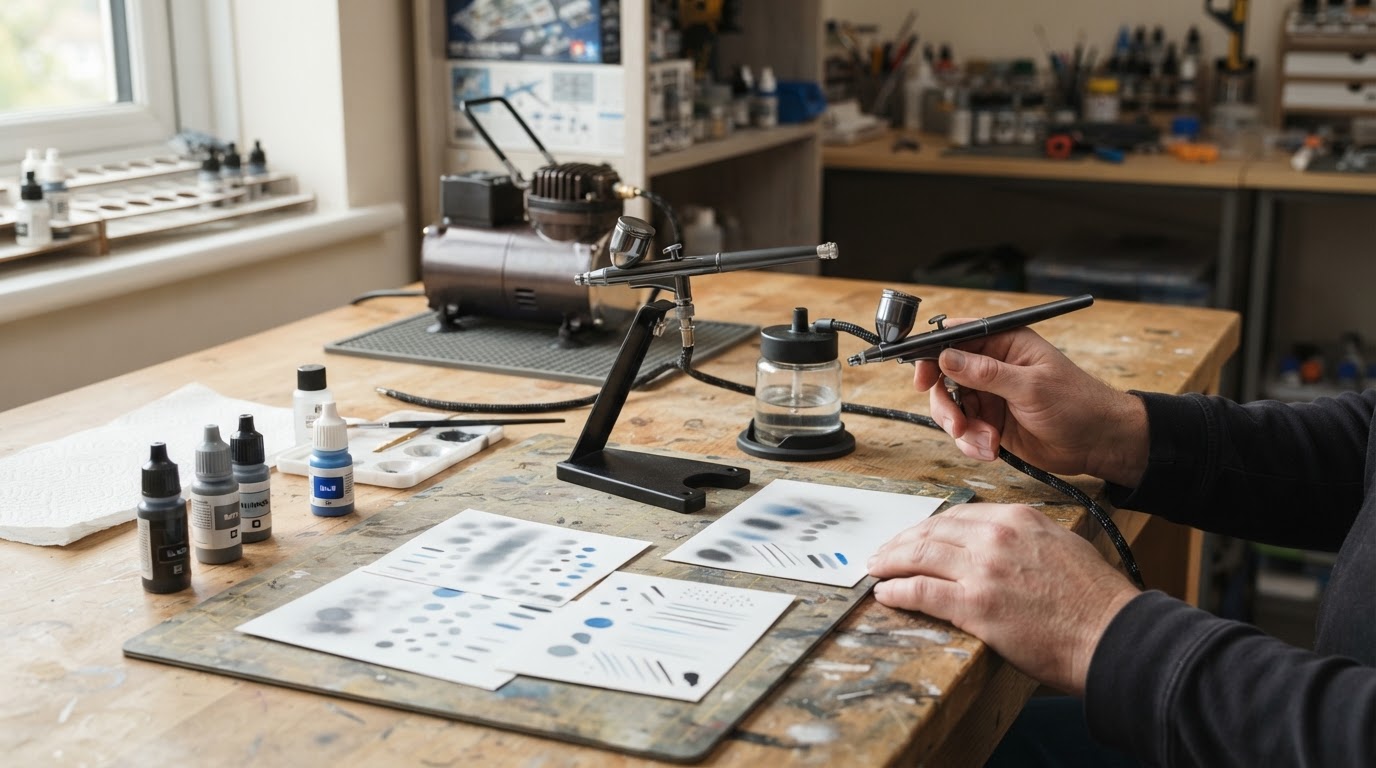
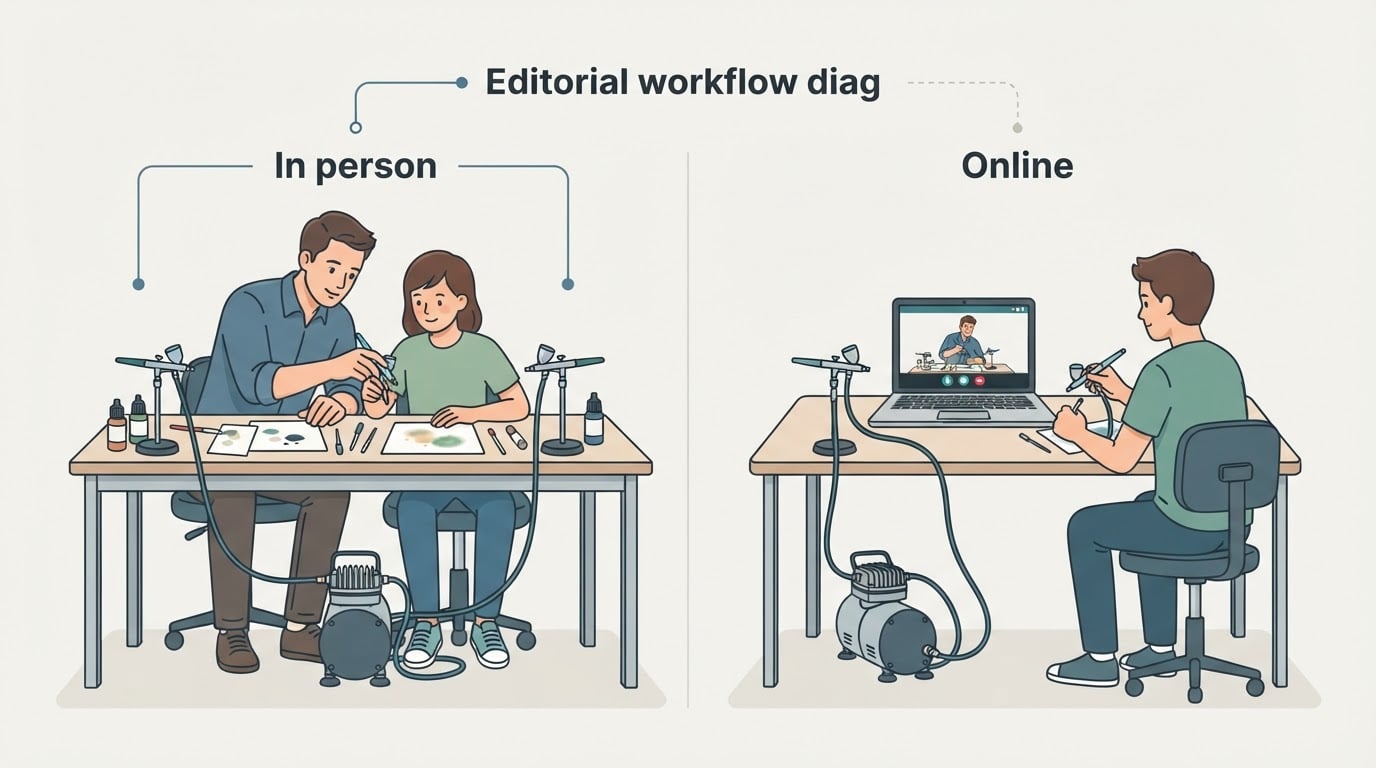
Point zero airbrush is the name you meet on consumer airbrush kits and supply listings aimed at beginners and mixed craft work. Treat it as a kit brand label on a product page, not as one fixed airbrush with one locked specification sheet.
This page is a scale-model buying checklist, not a bench test of a specific SKU. Retail copy changes, bundle photos change, and third-party pages often mix craft, auto graphics, nail work, and model coloring in the same listing. If a page will not give you action type, tip size, feed style, and compressor duty in plain language, you do not yet have enough product truth for a serious kit on the bench.
Who this kind of kit may suit
A Point Zero Airbrush style purchase is most useful when you want a low-stakes first setup and you are willing to verify parts before you trust it on a competition-grade model.
It can fit:
- a beginner who wants an airbrush plus a small compressor in one shopping path
- a hobbyist who already understands thinning paint and cleaning, and only wants a practice or spare tool
- mixed craft sessions where getting paint moving matters more than the finest freehand line
It is a weaker fit when you already know you need long-run compressor duty, very fine freehand work on tiny armor or aircraft parts, or a clear spares path for a named needle and nozzle set. In those cases, spend the money on a setup whose action type, tip size, and air supply are stated clearly and match plastic-kit paint work.
What to check before you buy
Scale model paint work punishes the wrong tip, a weak air supply, or a kit with no replacement path. Walk every Point Zero Airbrush listing through the same purchasing dimensions used for any first airbrush.
Action type
Confirm whether the airbrush is single-action or dual-action (double-action).
- Single-action usually locks paint volume to a preset while you control air with the trigger. It is simpler, but less flexible for fades and fine freehand work.
- Dual-action lets you meter air and paint separately on the trigger. That control is what most scale modelers want once they leave rattle cans.
If a listing only says “airbrush kit” without action type, treat that as incomplete product data, not a safe assumption.
Feed type
Note whether the cup is gravity-feed (top), siphon/bottom-feed, or side-feed.
Gravity-feed cups are common for model work because they need less air pressure to start paint flow and waste less paint on small batches. Siphon-feed bottles can hold more paint but often need more pressure and more cleaning care. A kit that never names feed type forces you to guess from photos alone—do that carefully, or pass.
Needle and nozzle size
Look for a stated tip size, not only a lifestyle photo.
As a working rule of thumb for scale models:
- finer tips around 0.2 mm favor thin lines, freehand camo edges, and delicate work, but they clog faster and are a poor match for broad primer
- larger tips around 0.5 mm favor primers, base coats, and wider coverage, but they are clumsy for tiny detail
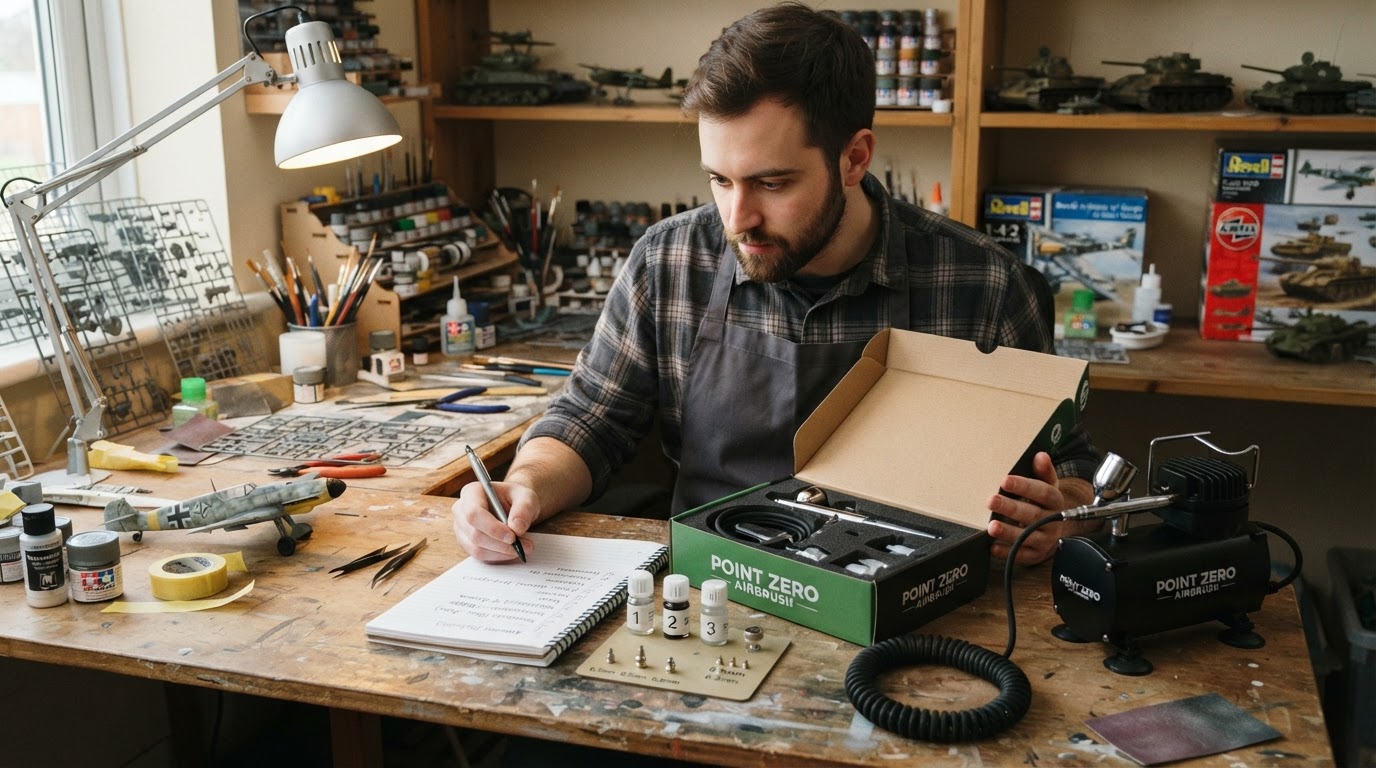
If the kit includes more than one airbrush or tip, write down which size is which before you open paint. A multi-airbrush box is only useful if you can match each tip to a real job.
Compressor duty for kit painting
If a compressor is bundled, read the duty claims that matter at the bench: continuous run behavior, tank or tankless design, moisture handling, and a usable working pressure band for acrylics and hobby paints.
A practical starting target for general airbrushing on models is steady working pressure in the hobby range, not a peak-PSI marketing number. If the listing gives no pressure band, no tank/tankless note, and no duty description, you cannot judge heat soak or moisture spit on a long primer coat. Portable craft compressors can be fine for learning trigger control on cardboard and still fall short for long sessions on a large kit.
What is actually in the box
Open the contents list line by line:
- number of airbrush bodies
- which needles, nozzles, and cups are included
- hose type and connector standard
- moisture trap or filter
- cleaning brushes, needles, or wrenches
- whether the compressor is a normal bench voltage unit for your shop, or a small portable unit meant for short craft sessions
Match the compressor story to the models you actually build. Bundle photography of craft projects you will never paint is not a specification.
Spares, cleaning, and repair path
Before you click buy, search the same brand and kit name for replacement needles, nozzles, and seals. An entry kit becomes expensive the day a bent needle has no replacement.
Also plan cleaning from day one. Acrylics tip-dry quickly. If the kit ships with a cleaning brush set, good—still buy the right cleaner for your paint system. If it ships with nothing, budget time and tools before the first color coat.
How to read multi-airbrush kit claims
Some Point Zero Airbrush retail pages describe multi-airbrush kits, sometimes with a compressor in the same package. That packaging can be convenient, but it is not automatic proof that every included airbrush is sized for scale models.
When you see a multi-tool kit claim:
- List each airbrush’s action type and tip size separately.
- Decide which body is your primer tool and which is your detail tool.
- Check whether spare tips are shared or unique to each body.
- Ignore bundle photography that shows craft projects you will never paint.
If the page will not support that four-line inventory, you do not yet have enough product truth to buy for a serious model.
Common buying mistakes
These mistakes show up constantly with budget kits:
- buying on “complete kit” language without a tip-size list
- assuming dual-action control without confirming it in the specification block
- pairing a fine detail tip with heavy primer straight away
- skipping moisture control, then blaming the paint for spatter
- no spare needle plan, then shelving the whole kit after one bent tip
- choosing a compressor for peak PSI bragging instead of steady working pressure and duty cycle
Fix the decision up front and you avoid most of those failures.
A simple go / no-go checklist
Buy only if you can honestly answer yes to all of these:
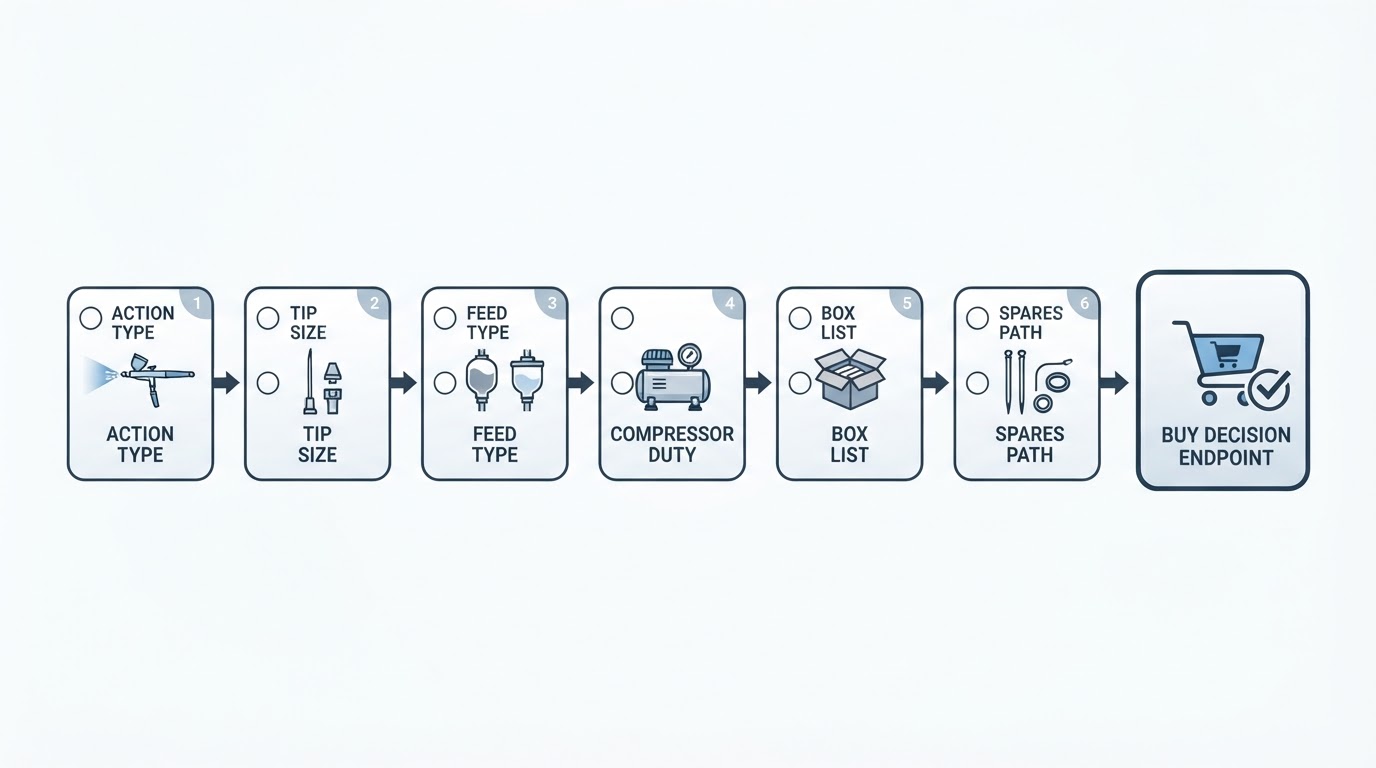
- Action type is stated and matches how you want to paint.
- Tip size is stated and matches primer versus detail work you do.
- Feed type is visible from specs or clear photos.
- Compressor duty and working pressure band are good enough for the length of your usual sessions.
- Box contents are itemized, not just implied by a hero image.
- You can find a realistic path to replacement needles or nozzles.
- Voltage, hose fittings, and cleaning needs fit your bench.
If two or more answers are “unknown,” wait for a clearer listing or a different kit. Unknown is not the same as fine for a first model.
Where Airbrush Modeler fits in this decision
Airbrush Modeler is an independent educational site for scale model builders choosing airbrushes and compressors. Use it as a supporting reference while you evaluate a Point Zero Airbrush kit, not as a substitute for the product’s own specification block.
Felo product screenshot.
The useful move is to separate brand marketing from purchasing dimensions: feed type, action type, needle and nozzle size, and compressor sizing. Those dimensions stay the same whether the box says Point Zero or another entry brand. When a listing is thin, fall back to those dimensions and keep the model on the bench from becoming the test mule.
This page is published by Airbrush Modeler as buying guidance for hobbyists. It is not a paid Point Zero brochure, and it is not a claim that every kit under that name was bench-tested here.
Practical next step
- Open the exact kit page you are considering and copy the action type, tip sizes, feed type, and compressor notes into a short note.
- Mark each line verified or missing.
- Only order when the missing list is empty enough that a failed coat will not strand the kit.
- On arrival, test spray on cardboard with your real paint system before any primed model parts.
That sequence keeps the purchase honest when product pages are noisy and independent measurements are not yet on hand.