The short answer to "can you airbrush Contrast paint?"
Yes. Warhammer's hobby guide explicitly says Contrast paints can be applied with an airbrush; an official painting example uses Asurmen Blue Contrast that way. Citadel Contrast is designed to pool and shade when brushed over a light undercoat. Sprayed in thin passes, it behaves more like a tint or filter, so do not expect the same one-coat recess effect.
Two habits keep it predictable: reduce the paint with the maker's matching medium, and test the mix on primed scrap before it touches a model. Spray thin build-up passes at the lowest pressure that atomizes the mix cleanly. No universal pressure, ratio, or room setup fits every brush, nozzle, color, and climate, so the maker's guidance plus your own test governs.
What Contrast paint is — and what it is not
Contrast is its own product family, not a generic ink and not a standard acrylic:
- Not a standard acrylic. Base and Layer paints are opaque and build up in thin coats; Contrast is transparent and relies on a high-flow medium to move pigment into recesses.
- Not a generic ink or wash. Those are transparent too, but Contrast is formulated for a one-coat brush role over a light undercoat, with a matching medium sold for thinning and tinting.
- A system with its own support products. Contrast Medium is the pigment-free medium for thinning and glazing Contrast colors, and Citadel's Air range is the line already thinned for airbrush use. Contrast's matching undercoats are light: white, pale gray, or bone.
That distinction matters when you spray: you are borrowing a brush-formulated paint, so you inherit both its transparency and its drying behavior.
How coverage changes when you spray
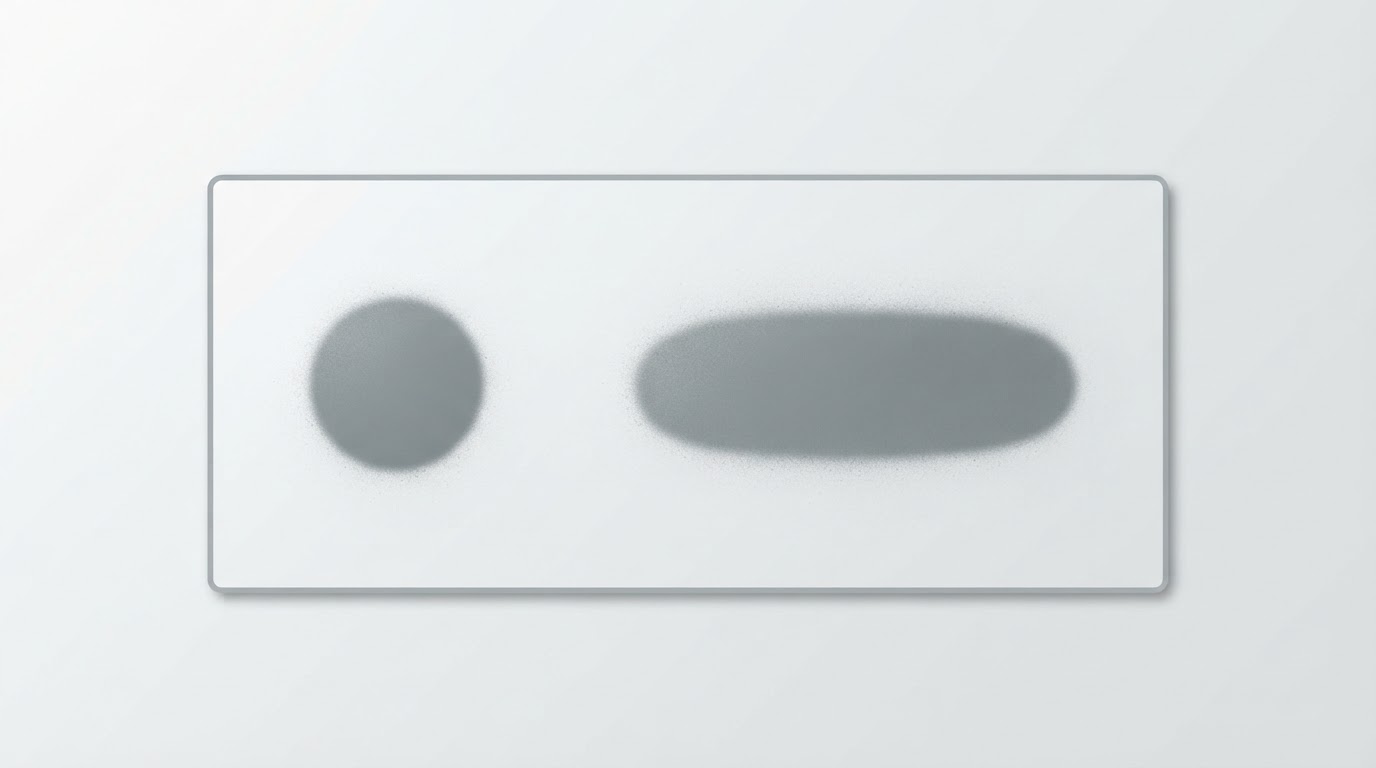
A brush lays down a relatively thick, wet film that wicks into recesses and dries darker there. An airbrush breaks the same paint into a fine mist, so the film is thinner and more even: high points and recesses receive nearly the same amount of pigment, and the automatic recess shading that makes Contrast famous does not happen by itself.
The practical consequences:
- Depth comes from passes. Spray thin passes, letting each one touch-dry, to build color density gradually instead of flooding the surface in one coat.
- The undercoat controls the result. A transparent film lets a darker undercoat mute the color and a light undercoat keep it bright.
- Large areas get easier, single figures get slower. The airbrush earns its place across flat panels and batches; one gaming-standard figure is usually faster with a brush.
- Metallic tinting works well. Thin transparent films shift the tone of metal without hiding it, which opaque paint cannot do.
Job | Brush | Airbrush |
|---|---|---|
One-coat shading on textured infantry | Best fit | Needs extra passes and a brush shade afterward |
Even tint over large flat areas | Slow and prone to streaking | Fast and even |
Precise recess shading on a character | Controlled | Difficult to place |
Tinting metallics or building smooth transitions | Possible but slow | Ideal |
Thinning Contrast paint for an airbrush
If you own Contrast paint and an airbrush, one question decides the session: how much does the paint need to be thinned? Start with the maker's matching medium, a little at a time, until the mix atomizes cleanly. Track the drops, because the same pot behaves differently through different nozzles and in different rooms. Warhammer's hobby guide recommends Contrast Medium for thinning Citadel Contrast; plain water can change its behavior and is not an equivalent controlled mix.
Work by symptom rather than by a fixed recipe:
What you see | Likely cause | Adjustment |
|---|---|---|
Speckling or spitting | Mix too heavy for the nozzle, or pressure too low | Add medium in small steps, then raise pressure slightly |
Wet streaks or spider-webbing | Too much paint in one pass, or spraying too close | Use lighter passes, increase distance, reduce flow |
Dry, grainy finish | Paint drying in the air or in the nozzle | Reduce distance slightly, check the mix, flush the nozzle |
Tint too weak | Too much medium | Add paint, not pressure |
Blotchy patches | Wet-on-wet passes over an uneven film | Let each pass touch-dry before the next |
Spray or brush? A quick decision table
Your goal | Use | Why |
|---|---|---|
Fast one-coat shading on textured models | Brush | The pooling medium does the shading in a single pass |
Even tint across large, flat surfaces | Airbrush | A thin mist covers panels without brush marks |
Tinting metallics or color modulation | Airbrush | Transparent passes build tone gradually |
Recess shading on a character model | Brush | Control matters more than speed |
A batch of similar models | Airbrush base tint, then brush shade | Speed from the spray, definition from the brush |
First time with a new pot | Neither — test first | Test on scrap to see how the color behaves over your undercoat |
A test-spray workflow with a clear finish check
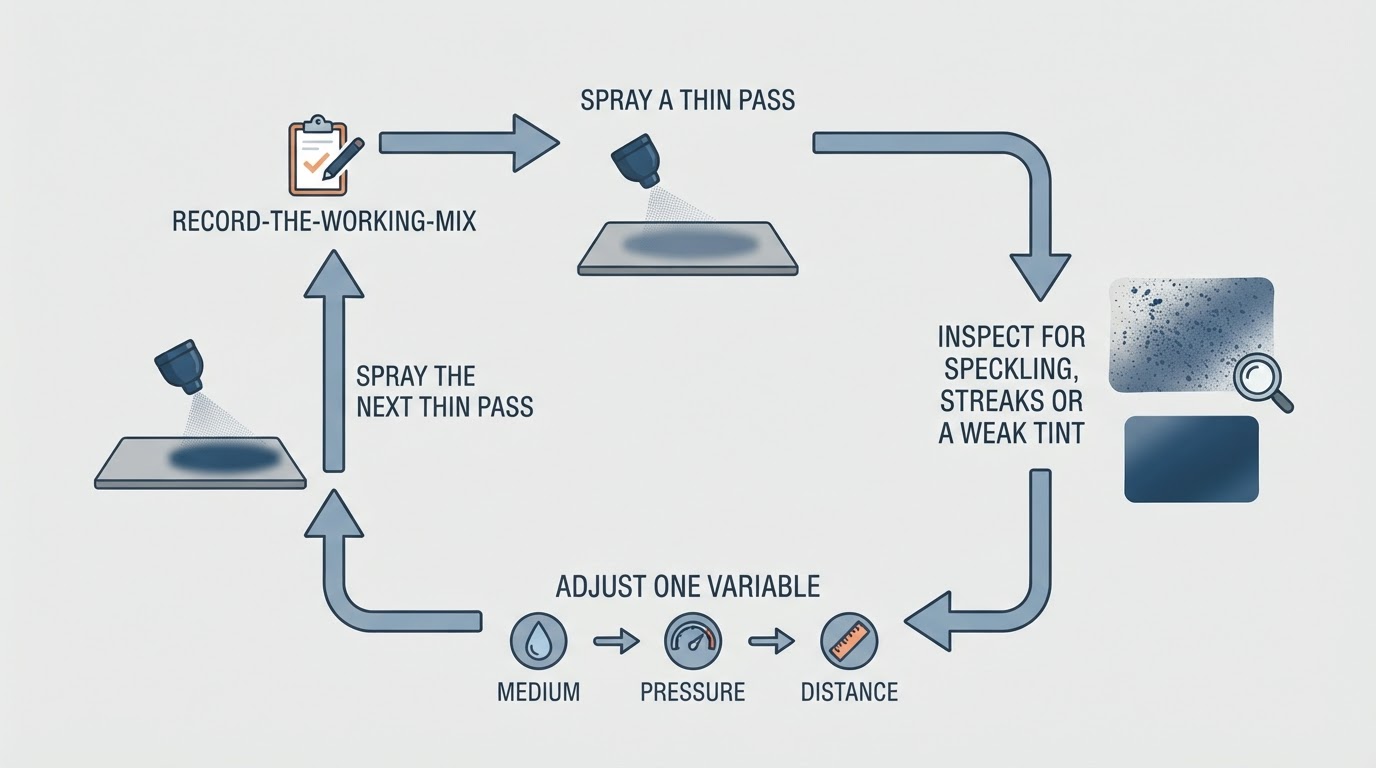
- Prime a scrap piece with the same undercoat you plan to use on the model. Record which undercoat it is, because it changes the result.
- Shake the pot, then put a small bead of Contrast on the palette and add the matching medium a little at a time. Write down the drops of each; a mix you cannot repeat is not a mix you can rely on.
- Spray one thin pass across the scrap at a steady distance. Keep the airbrush moving and do not flood the surface.
- Inspect the drying film. An even tint with no spitting tells you the mix atomizes cleanly. Recess shading will not appear; that is the brush's job.
- Let the pass touch-dry, then add another thin pass if you want more depth. Stop when the color matches your target.
- Check the finished test piece against this standard: streak-free and even, no speckling or dry spray, no wet pooling, and the target intensity reached. If a check fails, change one variable at a time — medium first, then pressure, then distance — and repeat.
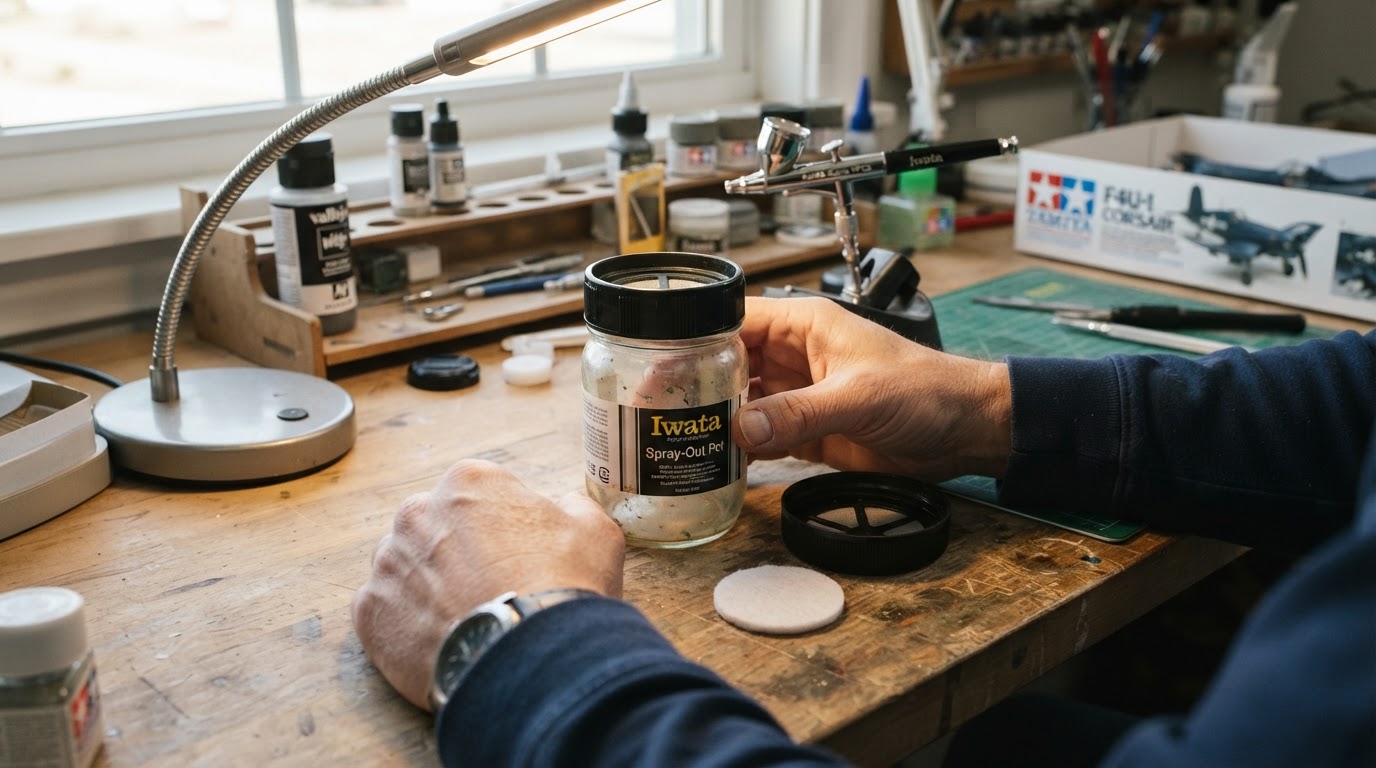
- Clean the airbrush promptly with cleaner or water as the product label directs. Pigmented contrast medium dries inside the nozzle and cup, and a dried mix is much harder to remove than a wet one.
For the separate question of putting ordinary brush acrylic through an airbrush, see our regular-acrylic compatibility guide. Contrast paint needs its own small test rather than a borrowed ratio.
Limitations to plan around
- Less automatic recess shading. The signature one-coat effect depends on a wet brush film pooling in recesses; thin spray passes generally do not reproduce it.
- Transparency cuts both ways. The undercoat color dominates the final tone, and pale or busy undercoats shift the result.
- Mix sensitivity. Medium, room temperature, humidity, and nozzle size all change how the paint sprays, so repeatability takes notes.
- Water is not the intended thinner. Water changes the behavior of Contrast paints; the matching medium is made for the job.
- Cleanup is not optional. Pigment and medium dry hard in nozzles, cups, and needles.
- It is slower for single figures. For one gaming-standard figure, brushing is quicker than spraying, testing, and cleaning.
Safety: let the label lead
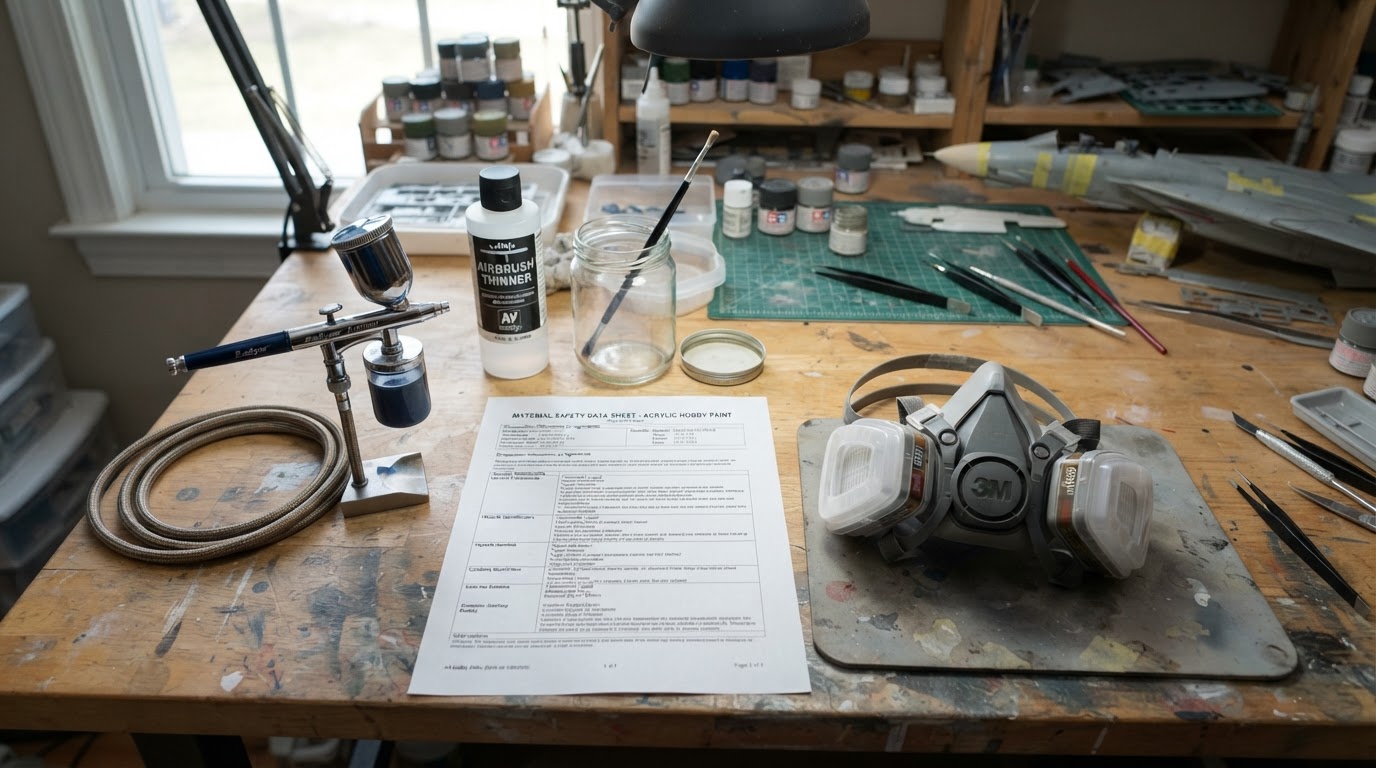
Airbrush work turns liquid paint and cleaner into an inhalable mist, so the safety rules come from the products, not from habit. Work with the ventilation the product label or safety data sheet specifies, keep your face out of the spray path, and use the respiratory protection the maker or safety documentation calls for; do not judge air quality by smell. Solvent-based cleaners and lacquers carry additional handling advice on their labels, compressors get hot in use, and paints, mediums, and cleaners should stay out of reach of children and pets. Your room, your equipment, and the label decide what is adequate; no article can certify that for you.
FAQs
Can you put Contrast paint straight into an airbrush without thinning it?
It may spray through some setups, but there is no reliable straight-from-the-pot rule across colors and nozzles. Start with a small test on scrap; if atomization is poor, add the matching medium in small steps. An even finish is the target, not a fixed ratio.
Does sprayed Contrast paint still darken recesses like brushing does?
Usually not to the same degree. The brush effect comes from a wet film that pools in recesses as it dries; thin spray passes tend to create a more even tint. If you want strong definition, build the tint with the airbrush and add recess shading with a brush.
Can you thin Contrast paint with water for airbrushing?
Contrast Medium is the maker's documented product for thinning Citadel Contrast. If you experiment with water, test it on scrap and do not assume it preserves the formulated behavior.