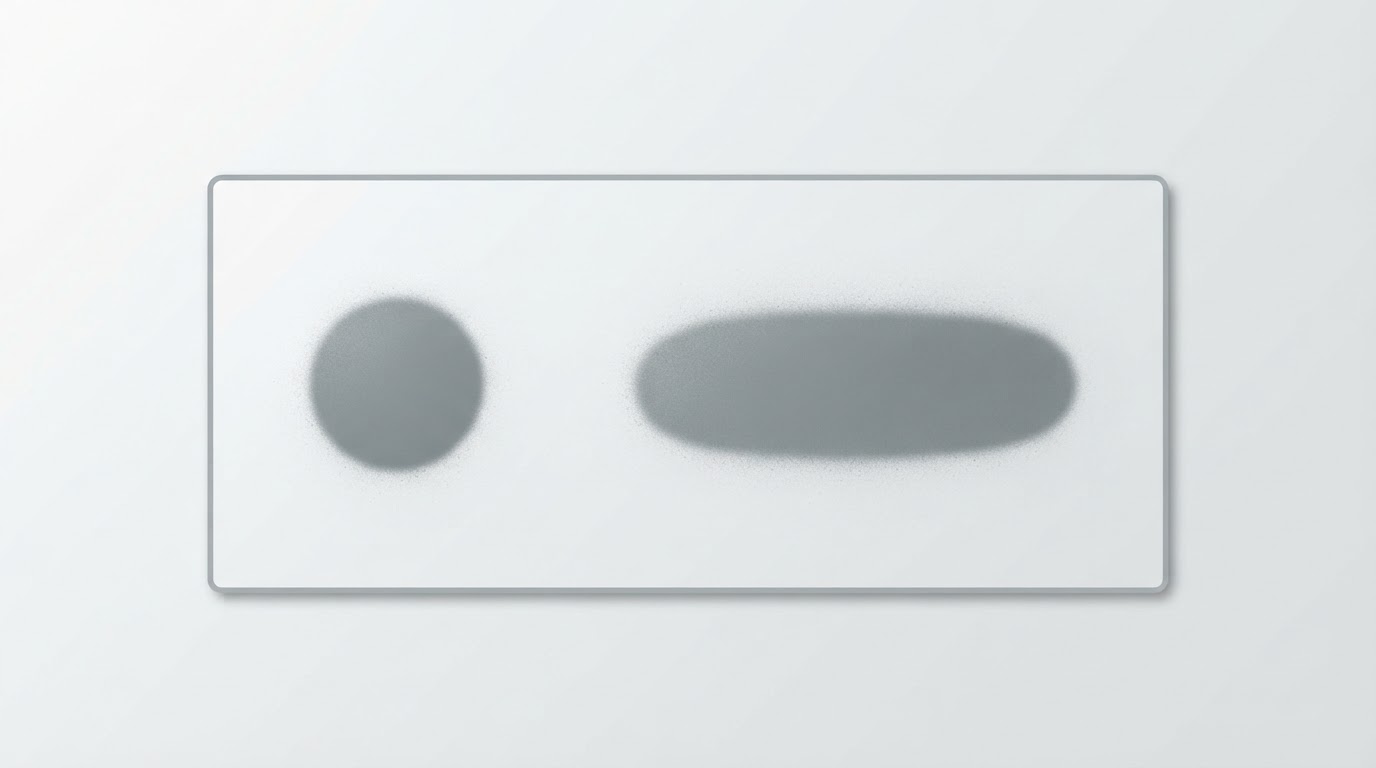
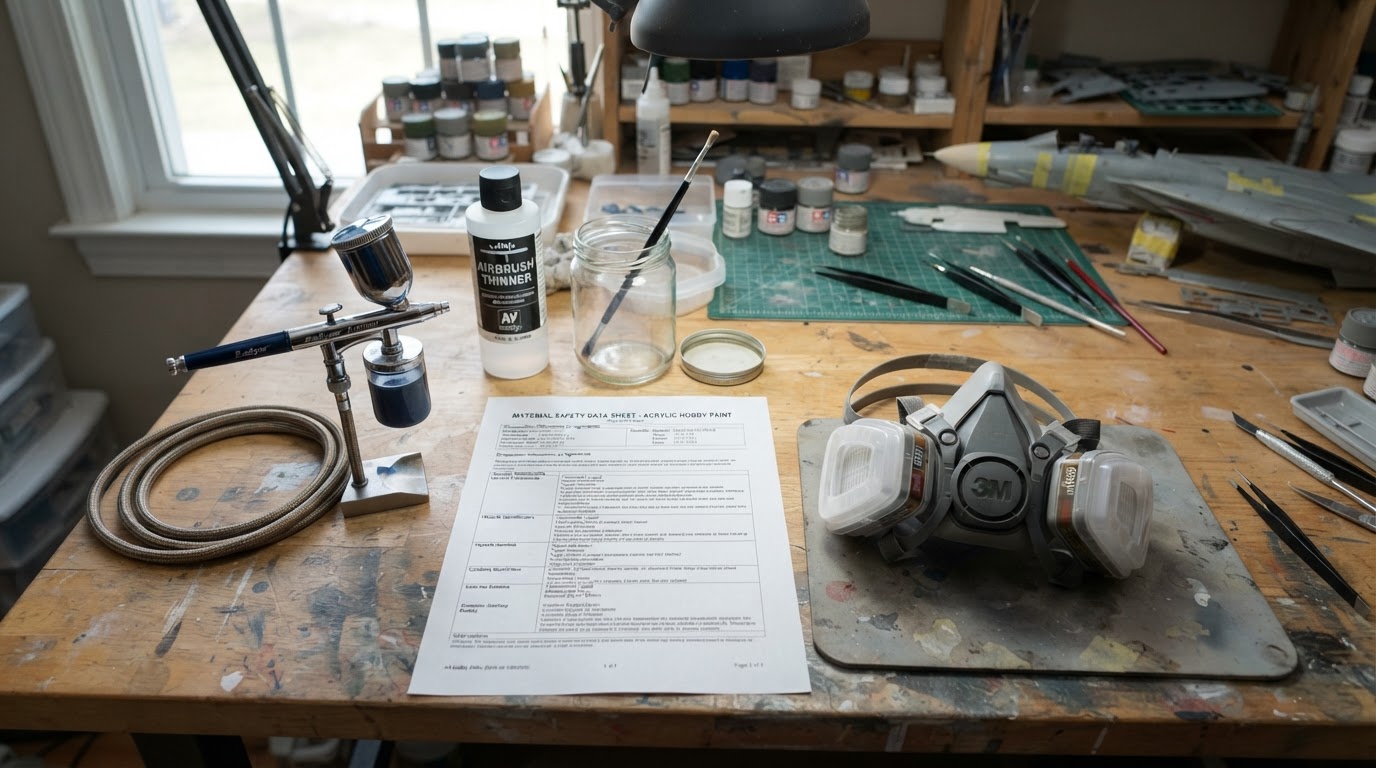
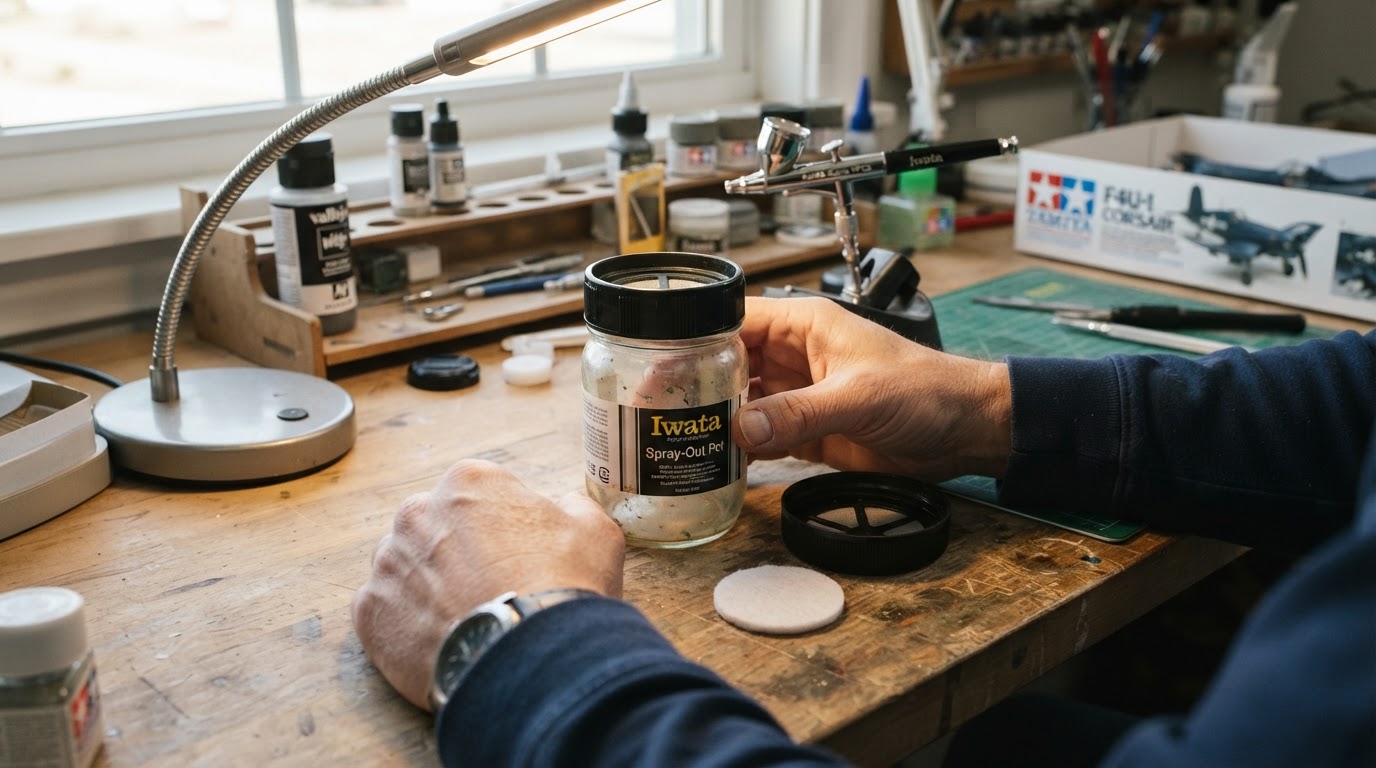
What an air-only press is supposed to do
On a double-action airbrush, the trigger has two jobs. Pressing it down opens the air valve. Pulling it back draws the needle out of the nozzle so paint can leave the cup. The SP-35 series manual by Anest Iwata Sparmax states the order in its setup steps: press for air only, then pull back for paint, and pull back further for more paint. Its technique section adds the habit that prevents confusion: start and end every pass with air only.
That is why a normal air-only press makes noise but leaves the surface dry. Air reaches the nozzle, but the needle still blocks the fluid passage.
Why paint flows before you pull the trigger
When paint appears during the air-only half of the sequence, the fluid path is already open. In a needle-controlled airbrush, that path is sealed by the needle tip resting in the nozzle. When the tip is held even slightly off its seat, airflow across the nozzle can drag paint through the gap. AirbrushDOC's airbrush troubleshooting guide maps this symptom to three head-side causes: a needle that is not fully seated, dried paint inside the nozzle, or a flared or damaged nozzle tip.
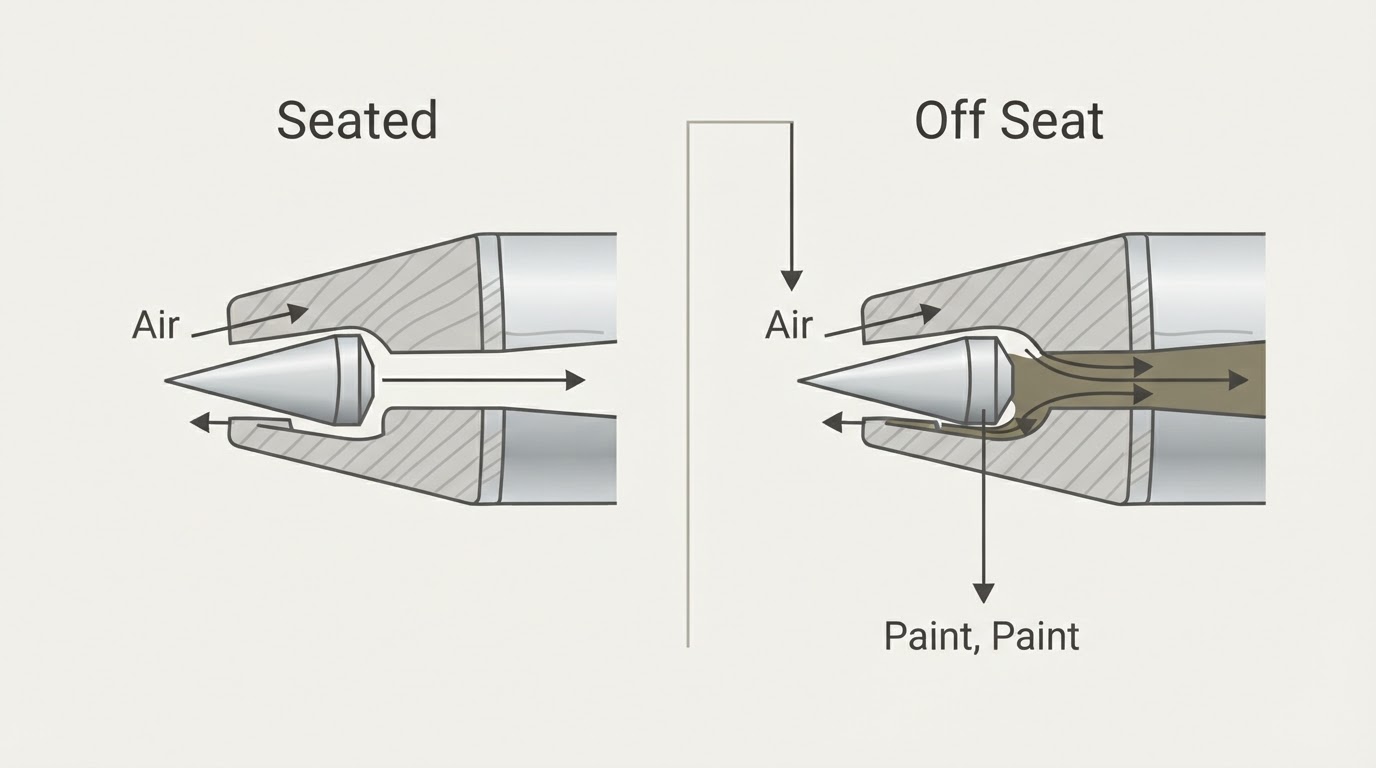
Two similar searches describe different faults here. "Airbrush needle not pulling back" is about the needle failing to move when you draw the trigger. "Airbrush spraying paint without pulling back" is this problem: the needle may barely move, yet the paint path is open anyway.
Air-only paint flow versus paint on release
The mirror symptom is paint that shows up only when you release the trigger. Paint with no rearward pull suggests the fluid path has not closed. Paint only on release may instead point to drag in the needle or trigger linkage, so diagnose it separately with the airbrush-sprays-on-release guide.
Match what you see to the next safe check
What you observe | Most likely area | Safest first check |
|---|---|---|
Paint flows every time you press for air | Needle-to-nozzle seal | Confirm the needle is fully seated, following your model's manual |
Paint flows after the airbrush sat unused | Dried paint on the needle or in the nozzle | Flush and clean only by the method your manual allows |
Flow starts, then weakens or stops mid-pass | Residue, feed restriction, or paint preparation | Compare a compatible clean liquid with your paint at the same pressure |
Trigger feels sticky or returns slowly | Trigger and needle return | Inspect the linkage and spring; stop if the mechanism binds |
Paint appears only when you release the trigger | Late needle return | Look for drag before replacing the nozzle |
Bubbles in the cup while air flows | Nozzle cap or nozzle seal | Check cap seating, then inspect the nozzle for damage |
Flow changes when you switch paints | Viscosity or preparation | Re-check mixing and nozzle size for that paint |
Safe checks, in order
1. Shut off and release the air supply
Disconnect the air before you remove any service part. The YIDIAN airbrush no-paint guide treats this as the baseline for every check: a pressurised airbrush can still push paint the moment you open the head, and a sharp needle is easy to catch a finger on.
2. Confirm the needle is seated, within the manual's limits
Open the back of the airbrush, loosen the needle chucking nut, and slide the needle forward until it lightly touches its seat, then retighten. AirbrushDOC's airbrush troubleshooting guide describes this as pushing gently until you feel slight resistance, which is the needle meeting the nozzle. Do not push hard. Forcing past that point can widen or damage the nozzle opening. If your manual routes this service to a technician or a supplied tool, stop where the manual stops.
3. Clear dried paint without enlarging the nozzle
A small deposit of dried paint inside the nozzle can hold the needle off its seat even when everything feels tight. Soak and clean only as your model's instructions allow. Never force wire, a needle, or an oversized brush through a precision nozzle, because a damaged opening can still pass liquid afterwards yet leak or spray unevenly. Follow the model's own warning, too: the SP-35 series manual, for one, tells owners not to remove the nozzle at all during cleaning. That limit is model-specific, which is why the next section matters.
4. Check trigger and needle return
A loose needle chucking nut can leave the needle unable to move with the trigger, and the SP-35 manual lists a loose chucking nut among the causes to check when paint does not spray. The YIDIAN guide adds a useful warning: a trigger can feel active while failing to move a loosely clamped needle. Test the movement with no paint and no air, and stop if the mechanism binds instead of pressing harder.
5. Treat a damaged nozzle as a part, not a cleaning problem
A flared or damaged nozzle tip will not clean back into a seal, so it needs the correct replacement part for that model. The SP-35 manual says a damaged nozzle should be replaced, and its accessory list includes a nozzle tool made to prevent the overtightening that damages nozzles during assembly. Needles, nozzles, and O-rings are wear parts, and the SP-35 warranty excludes them.
What is model-specific, not universal
No single check order fits every airbrush. Needle access differs, some models use a preset or cut-off handle, and cleaning limits differ from one manual to the next. Some makers show a nozzle wrench and a reseating procedure for their own head design; the SP-35 manual says not to remove the nozzle during cleaning. What stays the same is the order of work: stop the air, confirm the simplest cause first, and only then consider parts. Raising pressure will not close a gap between the needle and its seat, and cleaning will not restore worn metal.
FAQ
Does air-only paint flow mean I need a new nozzle?
Not necessarily. Start with the cheapest, most reversible cause: confirm the needle is fully seated, then check for dried paint holding it off the seat. Only inspection or the manufacturer's service procedure can establish that a nozzle is damaged. Until then, a replacement part is a guess.
Can I just push the needle in harder?
No. Pushing a needle hard into dried paint or an already-damaged nozzle can flare the opening and turn a cleaning job into a replacement. Use light contact and let the seat stop the needle. If the needle will not reach its seat at all, treat that as evidence of dried paint or damage, not something to overcome with force.
Why does my airbrush only spray when I release the trigger?
That is the mirror fault with a different cause. The needle or trigger linkage is dragging, so the paint path opens late as the needle returns. Check for sticky needle packing, a binding linkage, or a weak return spring in your model's service information. Re-seating the needle is not the fix for that symptom.
The short version
Paint during an air-only press means the fluid path is open before the needle is pulled back. Stop the air, confirm the needle is seated according to your manual, clear dried paint without forcing anything, and check the trigger's return. Replace only what inspection proves is damaged.