The short answer: three clocks, not one
Airbrush paint does not have one drying time. It has three, and mixing them up is how a finish gets smudged, lifted by tape, or sanded while it is still soft.
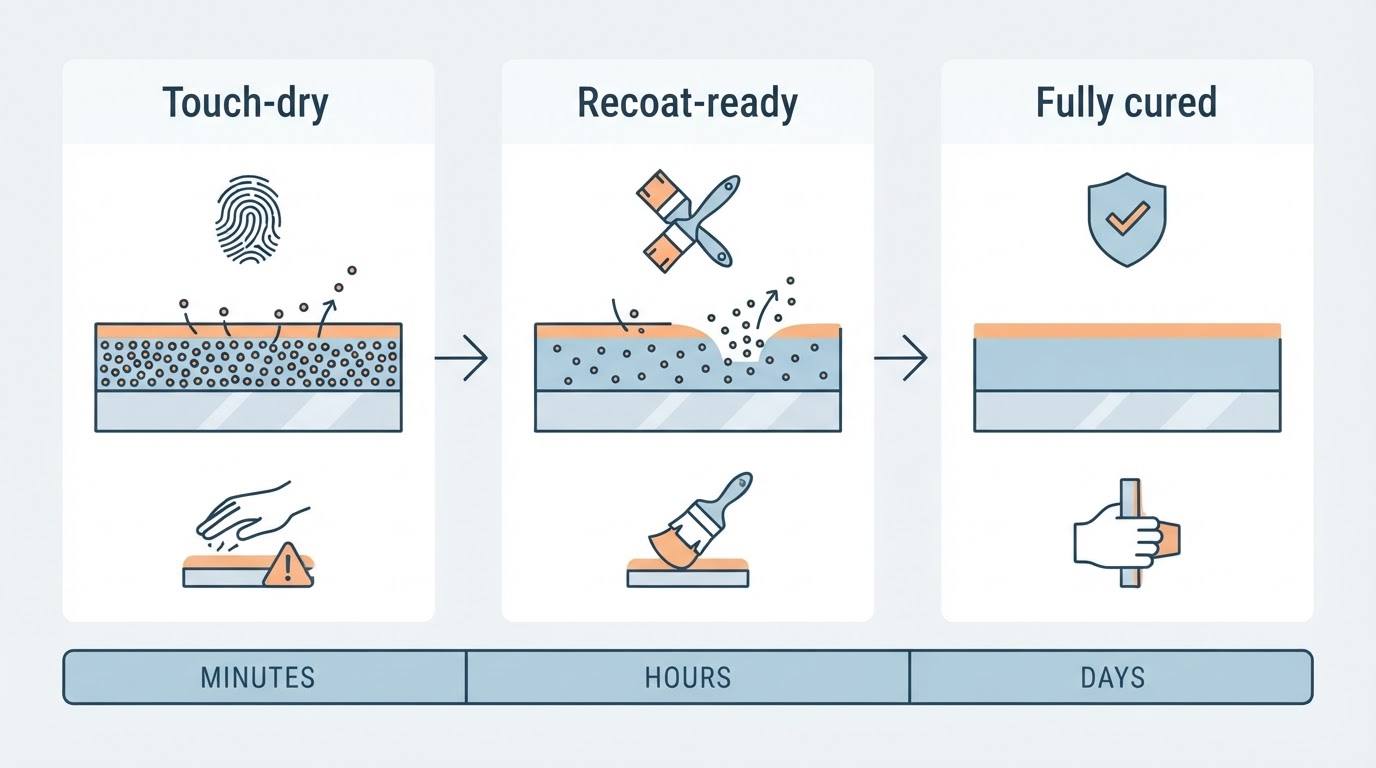
- Touch-dry (surface dry): the film stops looking wet and no longer transfers to a light fingertip; water or solvent is still leaving the paint.
- Recoat-ready: the surface has settled enough that the next color coat bonds without lifting what is underneath. This is also the earliest point for careful handling.
- Fully cured: the film has reached its specified final hardness and resistance. Masking, sanding and polishing may still damage a finish, so follow the product's instructions and test first.
The product label always beats any chart, including this one. Manufacturer technical sheets are examples, not a promise about the bottle in your hand.
What each stage really means
Touch-dry
Touch-dry describes only the top of the film. Water-based acrylics can reach it quickly in a warm, dry room; solvent paints feel dry as the solvent flashes off. Neither means the film is stable, so keep the fingertip test on a scrap card.
Recoat-ready
Dry to the touch and safe to recoat are different moments. Recoat too early and you trap solvent under the new layer, which causes wrinkling, a soft finish, or paint that lifts with tape. Thin passes release solvent better than one wet coat, which is why airbrush work often recovers faster than brushed paint.
Fully cured
Cure continues after the surface feels dry. Enamels are the slowest common hobby system and can stay soft for days; lacquers flash off quickly but still need time before polishing; even fast acrylics may not reach full scratch resistance for a day or more. If the label gives a cure time, plan around it.
Why the clock changes
The paint family sets the baseline
- Water-based hobby acrylics dry fastest and are the most sensitive to humid air.
- Lacquers dry by fast solvent evaporation and are usually recoat-friendly sooner, but still harden slowly.
- Enamels dry and cure slowest: plan on overnight handling and days to full hardness.
- Acrylic on the label does not guarantee water-based chemistry. Some airbrush acrylics contain organic solvents, so read the thinner and cleanup instructions.
Conditions that stretch the clock
- Temperature: a cold workshop slows evaporation.
- Humidity: moist air slows water-based paints in particular.
- Film thickness: a heavy wet coat traps solvent and dries unevenly. Several thin passes beat one soaking coat.
- Thinner or reducer: over-thinning changes how the binder sets.
- Airflow: still air slows drying; gentle moving air helps without blowing dust onto the model.
- Clearcoat: every varnish adds a new drying clock. Vallejo's varnish guide recommends several thin layers instead of one thick coat, because thick accumulations dry with unpredictable results (Using Vallejo Varnishes).
A practical decision matrix
Milestone | Usually safe next | Check with | Plan for |
|---|---|---|---|
Touch-dry | Move and inspect the model | Light touch on a scrap card | Minutes for thin acrylic and lacquer coats |
Recoat-ready | Spray the next compatible color coat | Product recoat interval, then a trial pass on scrap | Product-specific; do not infer it from touch-dry time |
Masking and firm handling | Mask, decal, handle normally | Tape test plus extra time | Often overnight; longer in cold or damp air |
Fully cured | Sand, polish, weather, assemble | Scratch or solvent check on scrap | A day to several days, longest for enamel |
Treat the schedule column as a hint, not a specification. Your paint, thinner, weather and coat thickness can move every row.
Test a scrap piece first
A scrap card painted alongside the model is cheap insurance:
- Paint a spare piece of plastic or card with the same paint, thinner ratio, pressure and number of passes.
- Keep it in the same room, so it sees the same temperature and humidity.
- Note the time, then check with a light fingertip - no rubbing.
- At the label's recoat interval, spray a trial pass on the scrap and check whether the lower coat lifts, wrinkles or remains soft.
- If you plan to mask or polish, test that exact action on a separate painted scrap only after the manufacturer's stated wait. Do not use solvent or a destructive scratch test on the model to guess whether it has cured.
- When the result is borderline, give it more time. There is no prize for being early.
Rules that keep you out of trouble
- Follow the label. It is written for the exact chemistry in the bottle.
- Never mix solvent systems. Do not thin water-based acrylic with lacquer thinner, and do not combine leftovers. Use the matching thinner and clean the airbrush between systems.
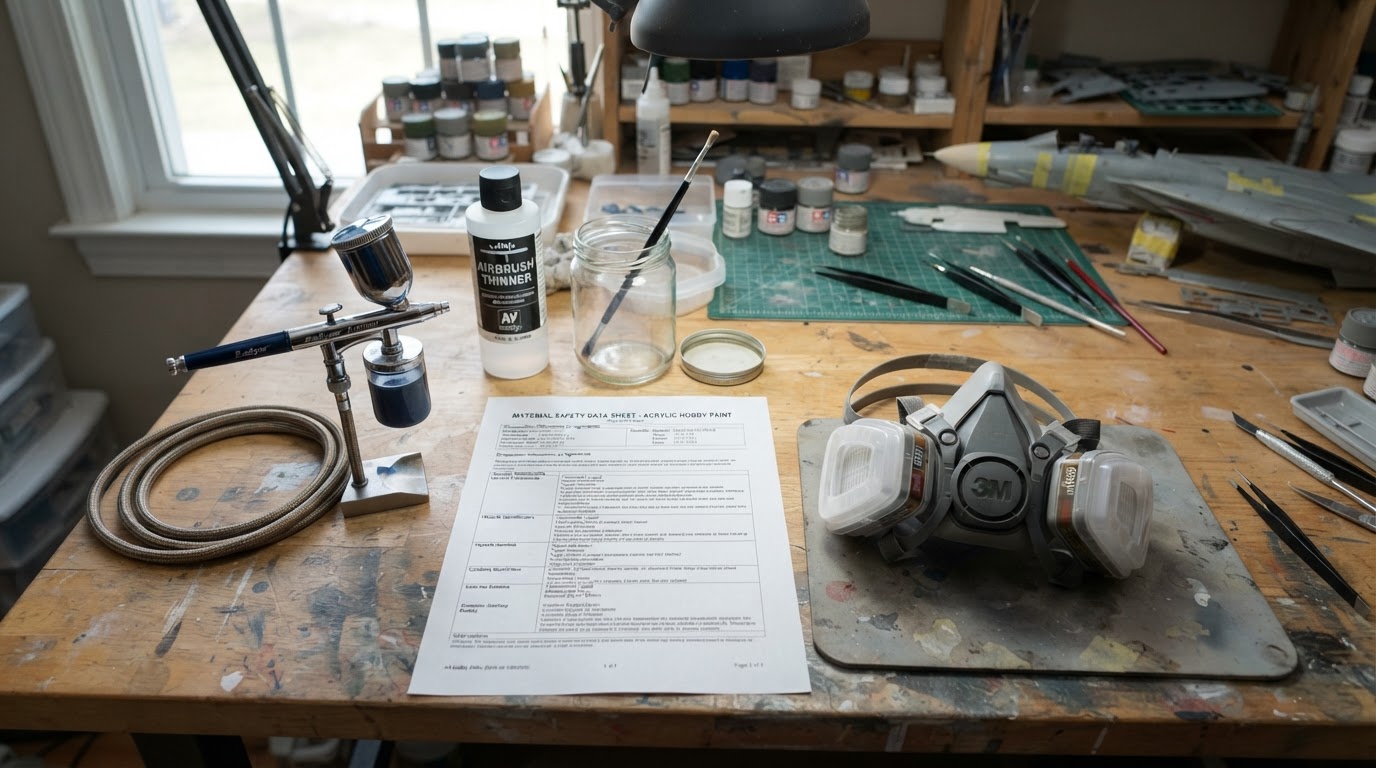
- Ventilate. Solvent paints and thinners need moving air and proper protection; a hobby room is not a spray booth.
- Do not confuse drying with tip dry. Paint drying on the needle while you work is a nozzle, airflow and thinner issue, not the drying time of the film on the model; see our airbrush tip-dry guide.
Three questions that come up again and again
Can I speed drying with a hairdryer or dehydrator?
Do not apply a hairdryer or dehydrator to solvent-based paint unless the manufacturer explicitly permits that method; heat and flammable vapors are a hazardous combination. Even for water-based products, high heat can distort plastic or skin the surface while the layer underneath stays soft. Follow the product's drying conditions.
Can I recoat as soon as it feels dry?
No. Feels dry is not recoat-ready. Wait for the product's stated recoat interval, then try the next coat on a matching scrap. If it wrinkles or lifts, stop and follow the maker's troubleshooting guidance.
Why is the paint dry but still soft, and why does it smell?
The surface dries first; the film underneath is still releasing solvent and finishing its cure. A soft film that clogs sandpaper or smells of solvent needs more time, not more heat. Enamels and thick coats are the usual suspects.