All Posts
Browse all blog posts
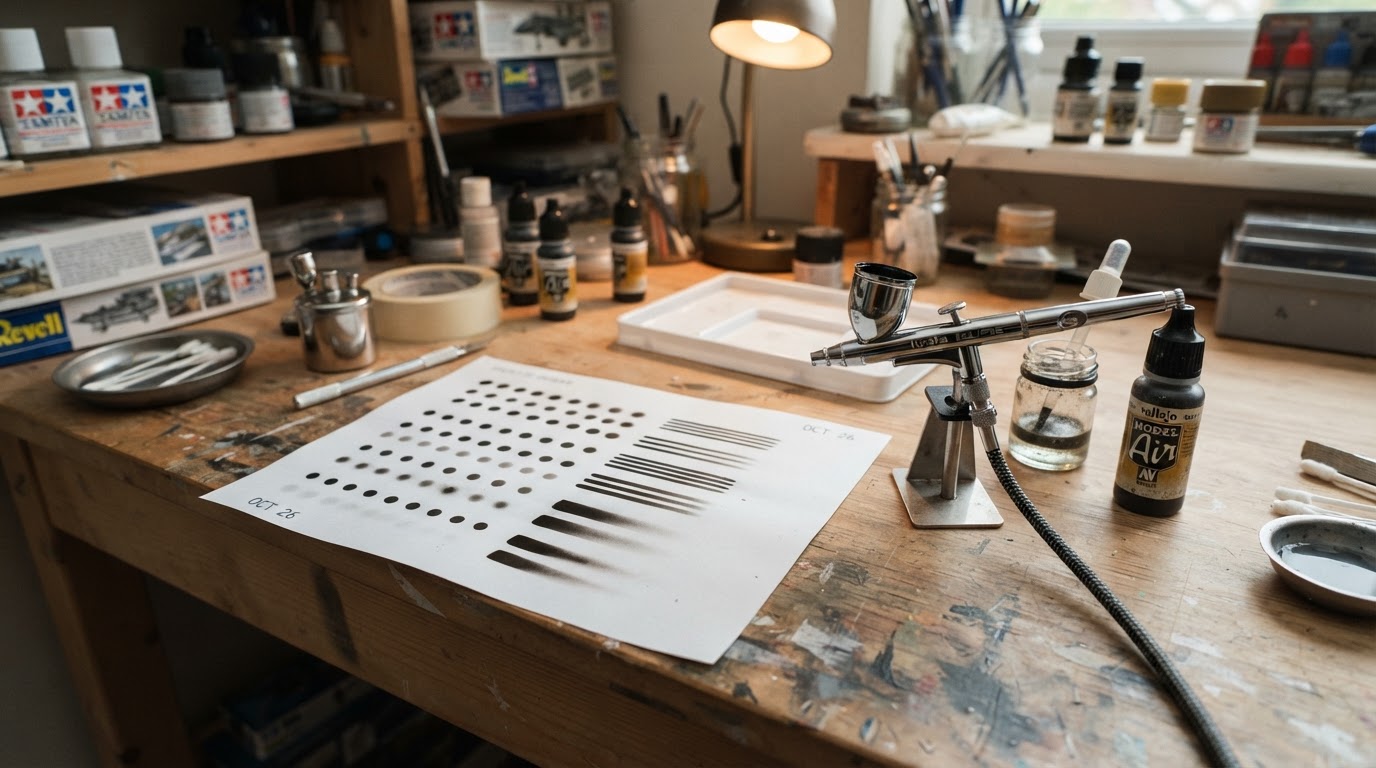
How to Airbrush: Setup, Control, and Practice Drills
Learning how to airbrush comes down to four things you can adjust: air pressure, spray distance, trigger travel, and paint thickness. Sort those out on paper before you spray a model.
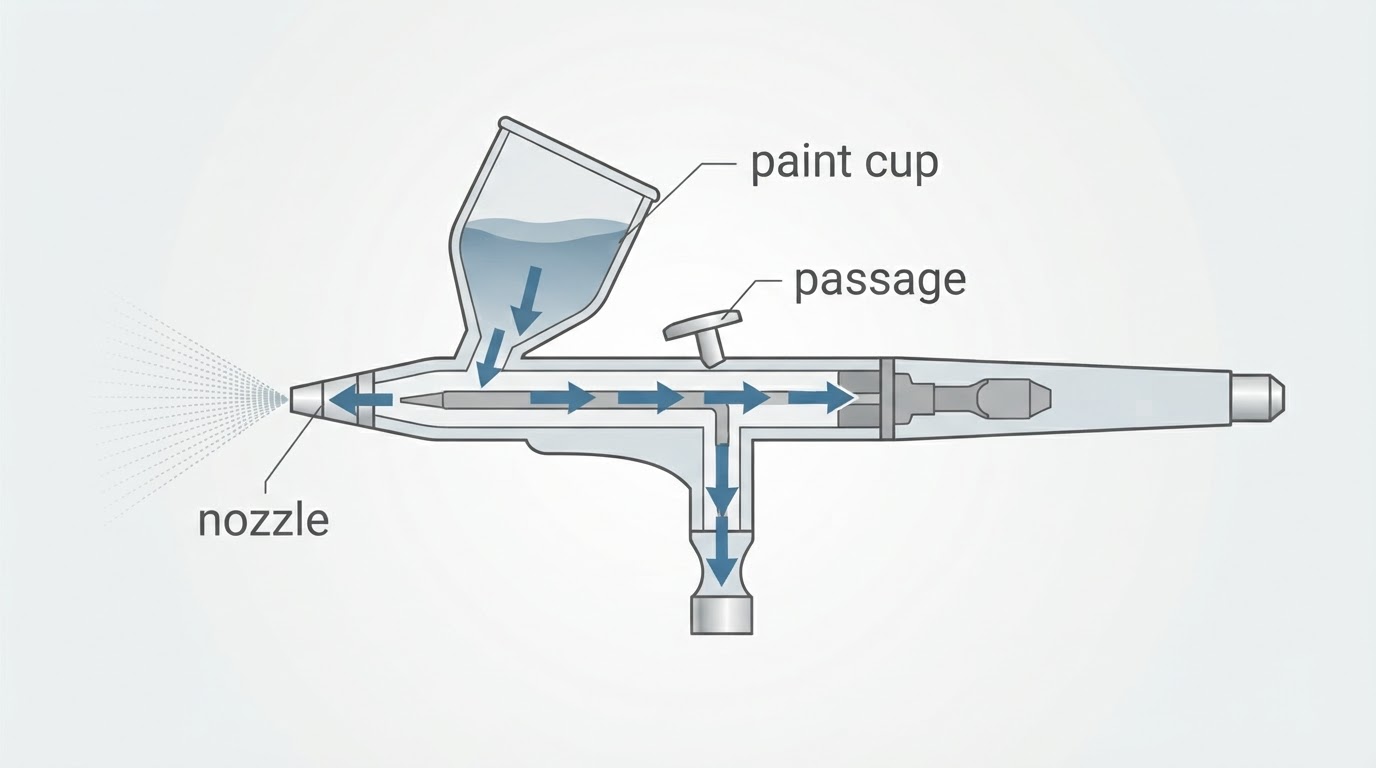
How to Clean an Airbrush: A Step-by-Step Routine That Protects the Needle
Want to know how to clean an airbrush without guessing? Rinse between colors, clean properly after every session, and strip the brush down only when the spray tells you it is needed.
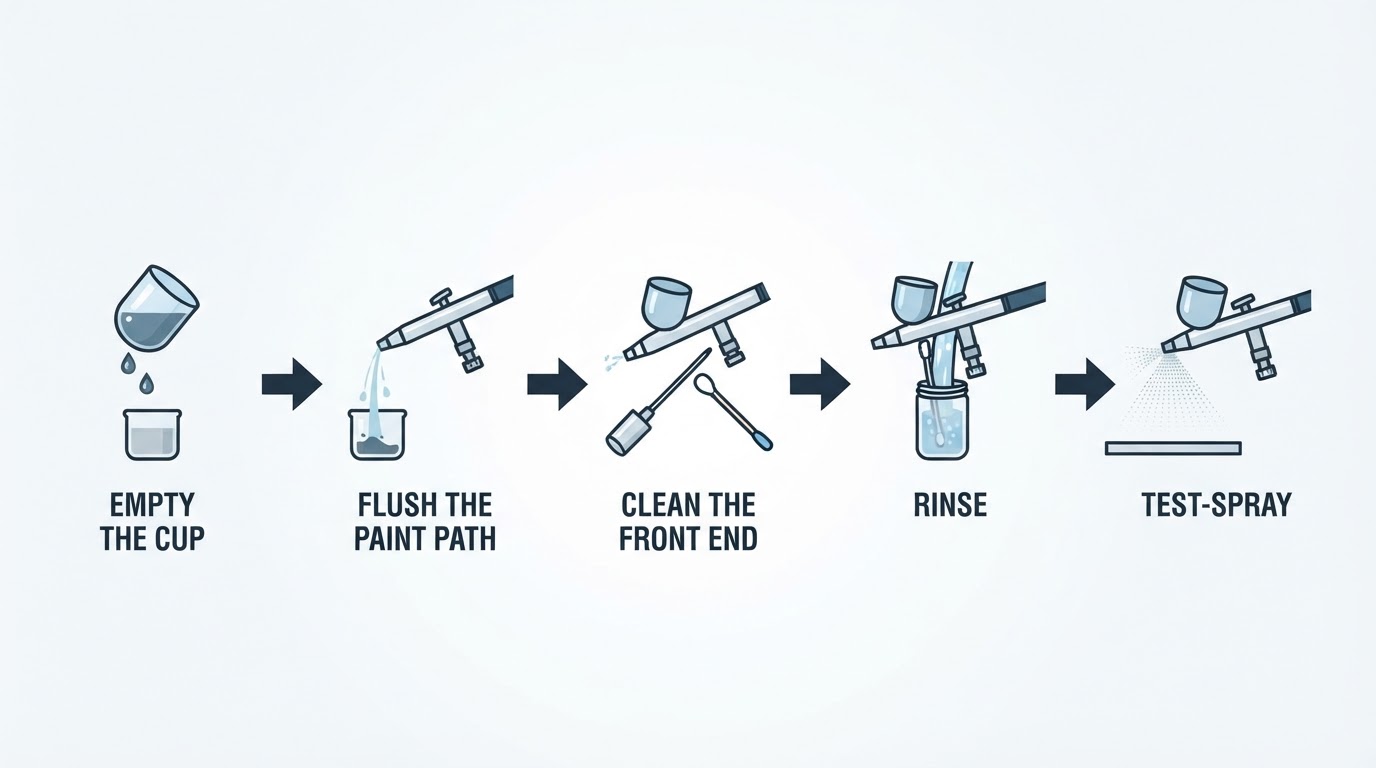
Tamiya Airbrush Cleaner: What It Is and How to Use It
Tamiya Airbrush Cleaner is a cleaning fluid sold to flush paint out of airbrush paint paths, color cups and brushes, and the product label plus its safety data sheet are the final word on safe use.
Best Airbrush Cleaner: Medea, Tamiya 87089, and How to Choose
There is no universal best airbrush cleaner. Start with the paint label and airbrush manual, compare the documented Medea and Tamiya 87089 options, and fix dried residue before buying a stronger solvent.
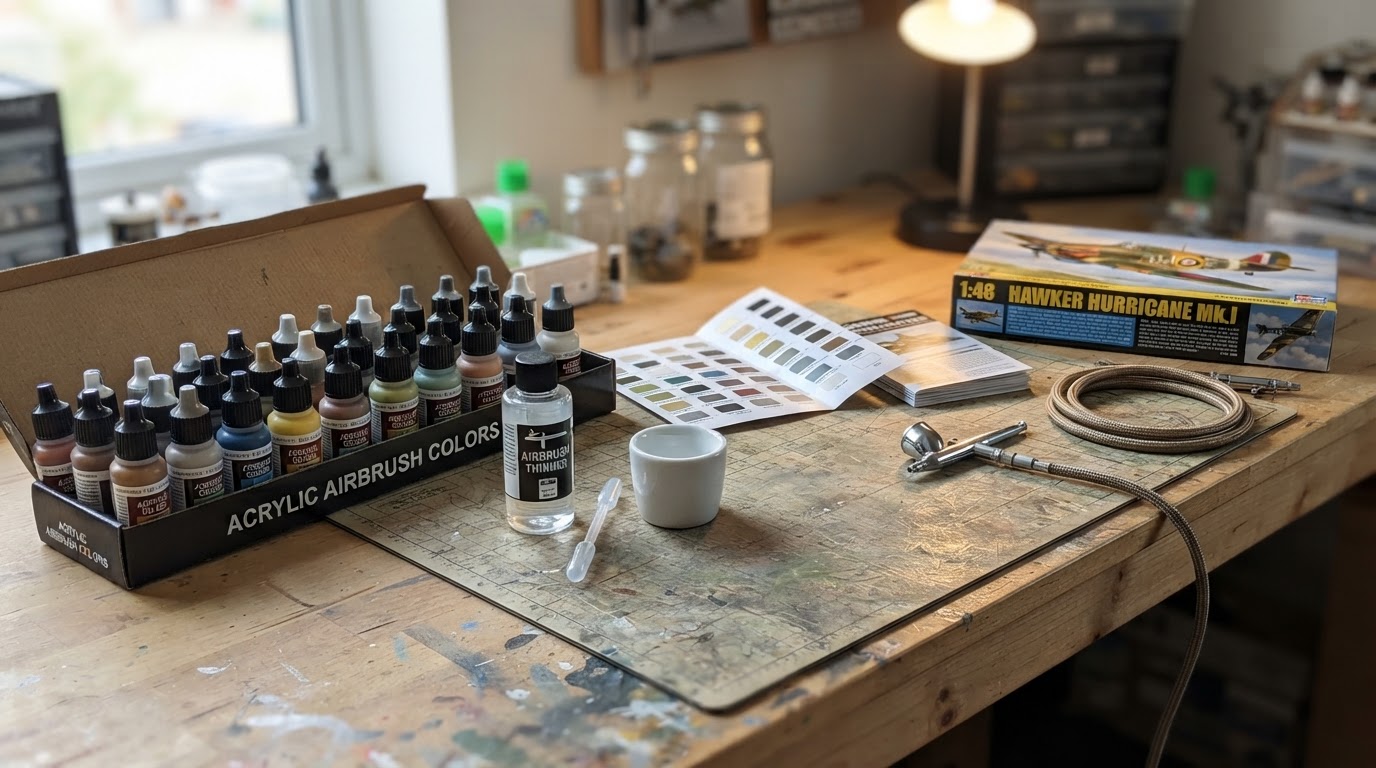
Airbrush Paint Kit: What's Inside and How to Choose One for Models
An airbrush paint kit gives you a matched start on sprayable color, but the real test is whether its paint type, thinner and colors suit your airbrush and the models you build.
Airbrush Cleaning Brushes: Types, Use, and When to Stop Brushing
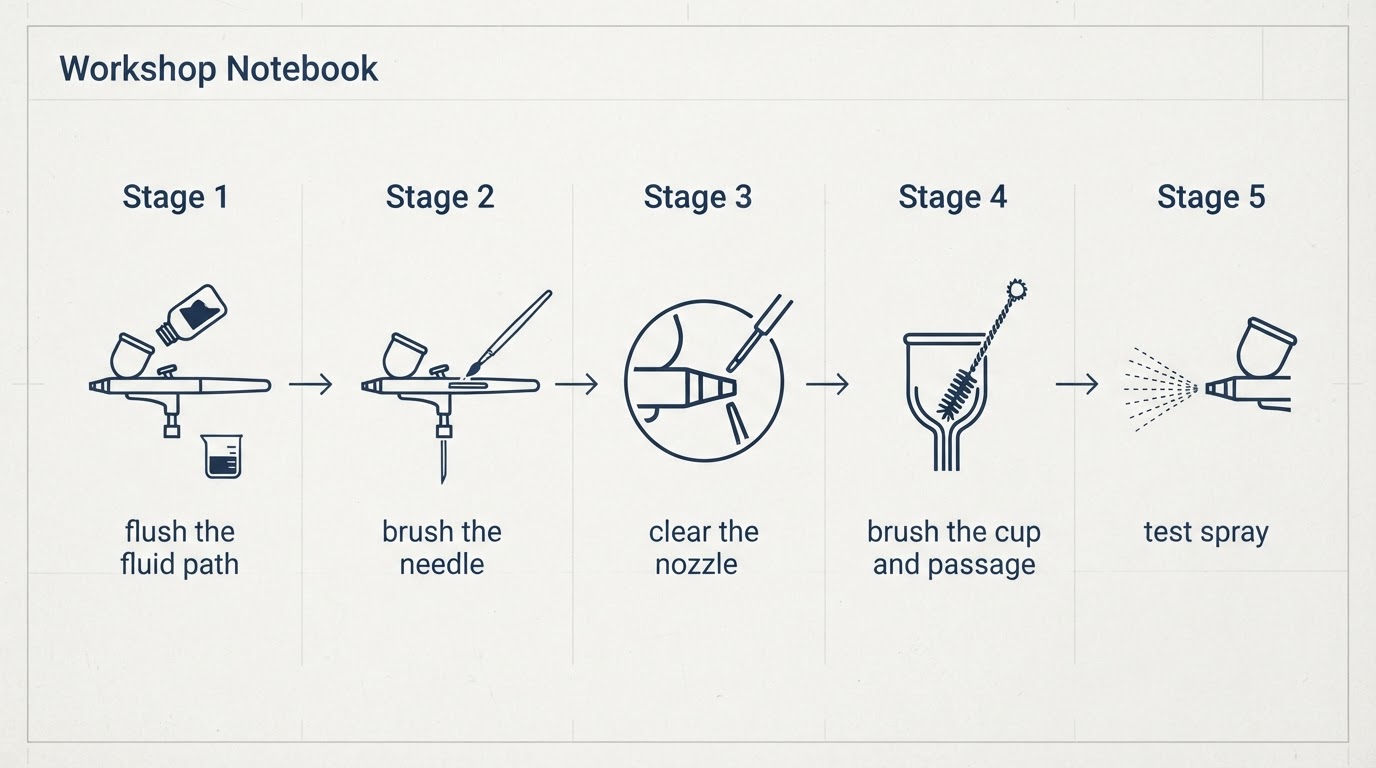
A set of airbrush cleaning brushes gets dried paint out of the needle, nozzle, color cup, and paint passage that a flush alone leaves behind.
Airbrush Cleaning Kit: What's Inside and How to Use It
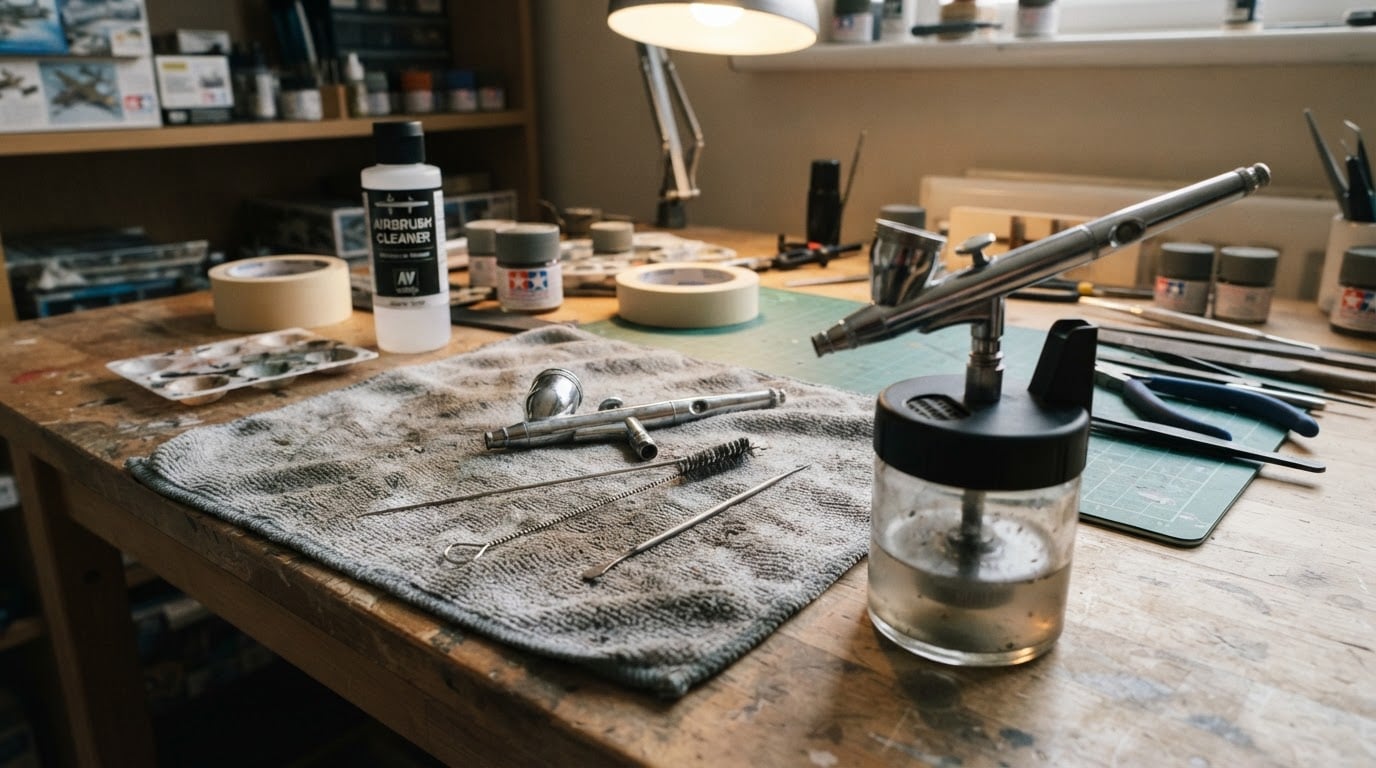
An airbrush cleaning kit is a small set of purpose-made tools that clears dried paint from your airbrush without scratching the needle, nozzle or internal passages.
Airbrush Cleaner: What It Removes and How to Use It
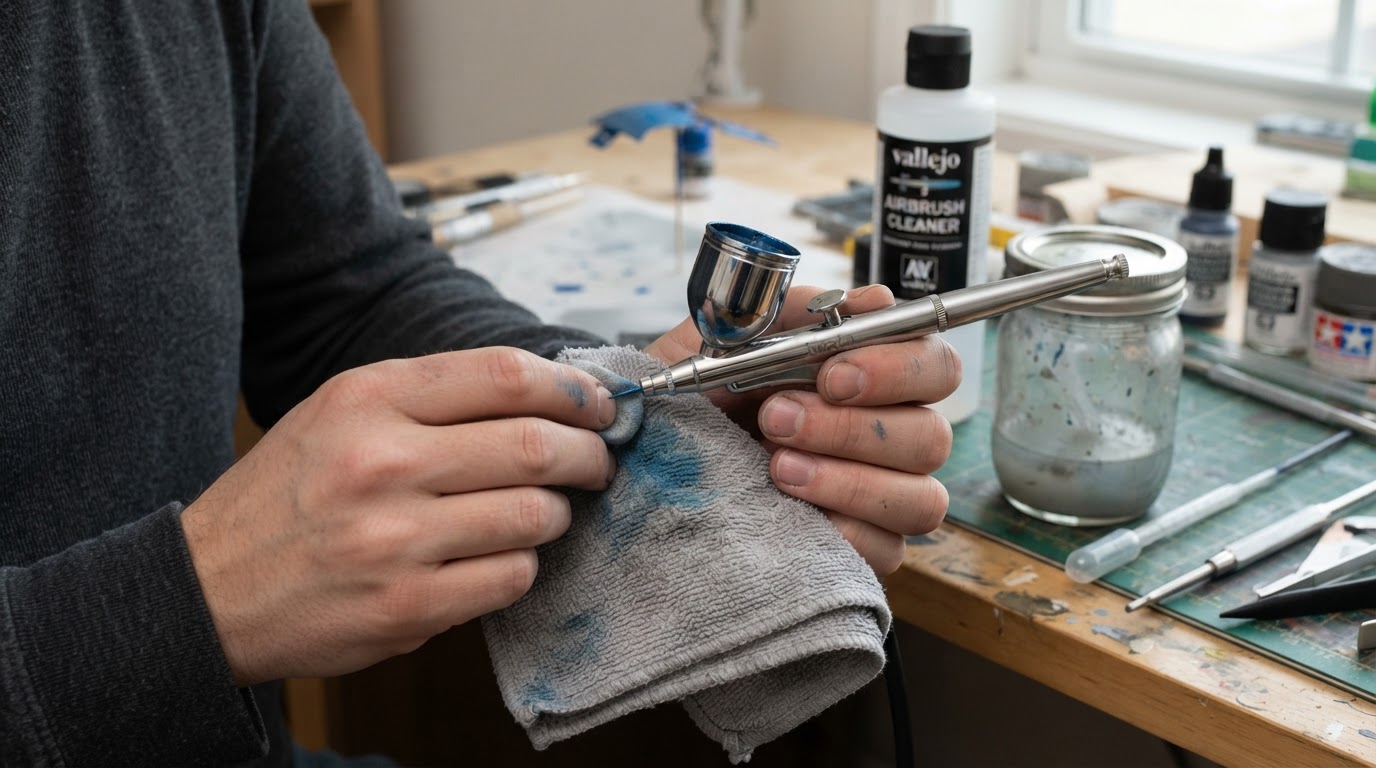
An airbrush cleaner is a fluid that dissolves paint residue before it hardens in the brush. Match it to your paint, flush at every color change, and the brush keeps spraying evenly.
Airbrush Paint: What Works in an Airbrush and How to Prepare It
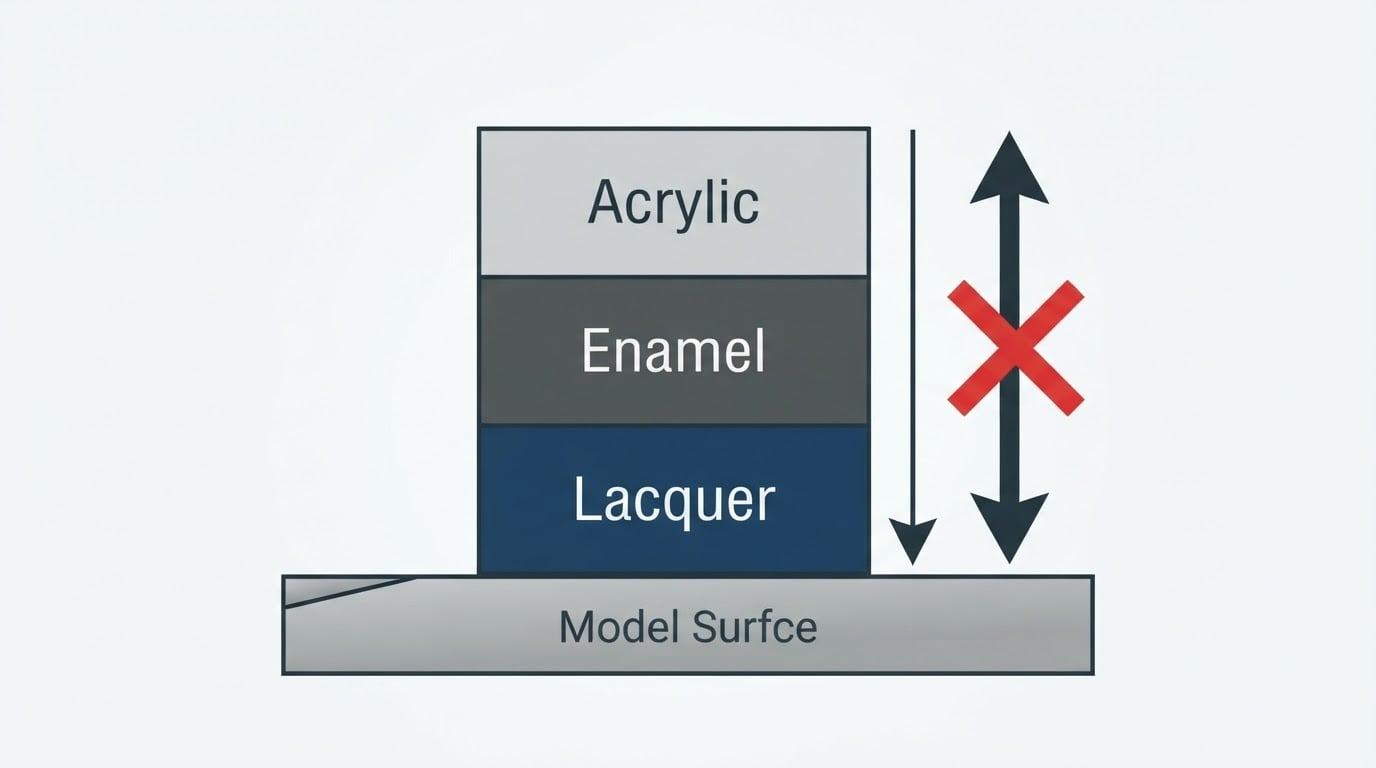
Clean airbrush paint is mostly a matter of mix and timing: the paint should flow like thin milk and sit on a compatible, cured layer, so thin in small steps and test on scrap first.